Animals That Start with G: From Gazelle to Gecko
You've probably noticed that "G" animals are everywhere once you start looking. Giraffes on safari, geckos in your bathroom, guinea pigs in a classroom cage. The list of animals that start with G spans nearly every ecosystem and size range, from a 5,000-pound great white shark to a gecko small enough to sit on your thumbnail.
As of 2026, there are over a hundred species worldwide that carry the G banner in English. Some are household names. Others, like the gharial or the Gila monster, you might never have heard of.
That's what we're digging into here. Whether you're prepping for trivia night, helping a kid with the alphabet, or just curious about what's out there, this guide covers the giants, the tiny, and everything in between.
Quick Answer
The most common animals that start with G include the giraffe, gorilla, gecko, gazelle, grizzly bear, golden retriever, great white shark, guinea pig, goose, grouse, gibbon, gharial, Gila monster, gnu, goldfish, and gopher. That's 16 familiar species right there.
Some live in your house. Others live in the ocean, the desert, or the frozen north. Each one has unique traits, and a few are critically endangered.
Why "G" Animals Are Worth Knowing
Every letter of the alphabet has its animals, but G punches above its weight. You get two of the largest land predators and some of the most recognisable herbivores on the planet. You also get extreme diversity in body size, habitat, and behaviour.
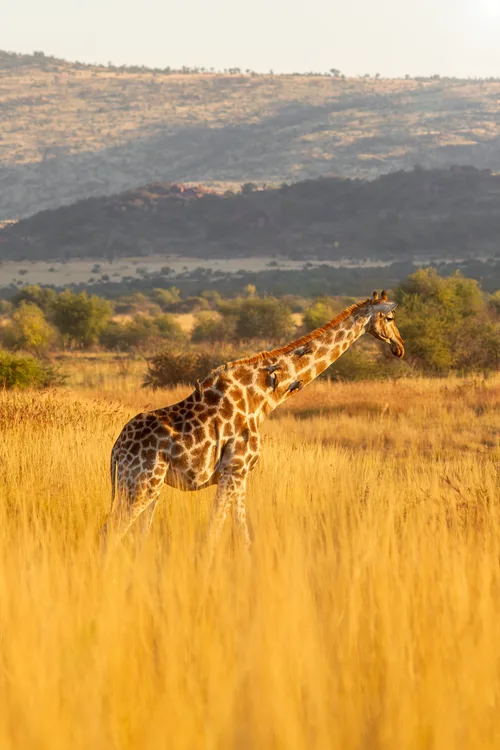
Consider this. The giraffe stands up to 20 feet tall, making it the tallest land animal on Earth. Meanwhile, the smallest gecko species measures about 0.6 inches long.
Same letter, wildly different scale.
G also covers every major animal group. Mammals, reptiles, fish, birds, and amphibians all have representatives. That makes the G-list a mini crash course in biodiversity, which is exactly why teachers and parents keep coming back to it for lessons.
Source: Web (Bing) / pexels.com (Web image (fair-use with source credit))
The Big Icons: Gorilla vs. Grizzly: The Two Giants
When people think of G-animals, these two massive mammals usually pop up first. They're both apex predators in their respective ecosystems, but they couldn't be more different in how they live, move, and survive.
The Gorilla
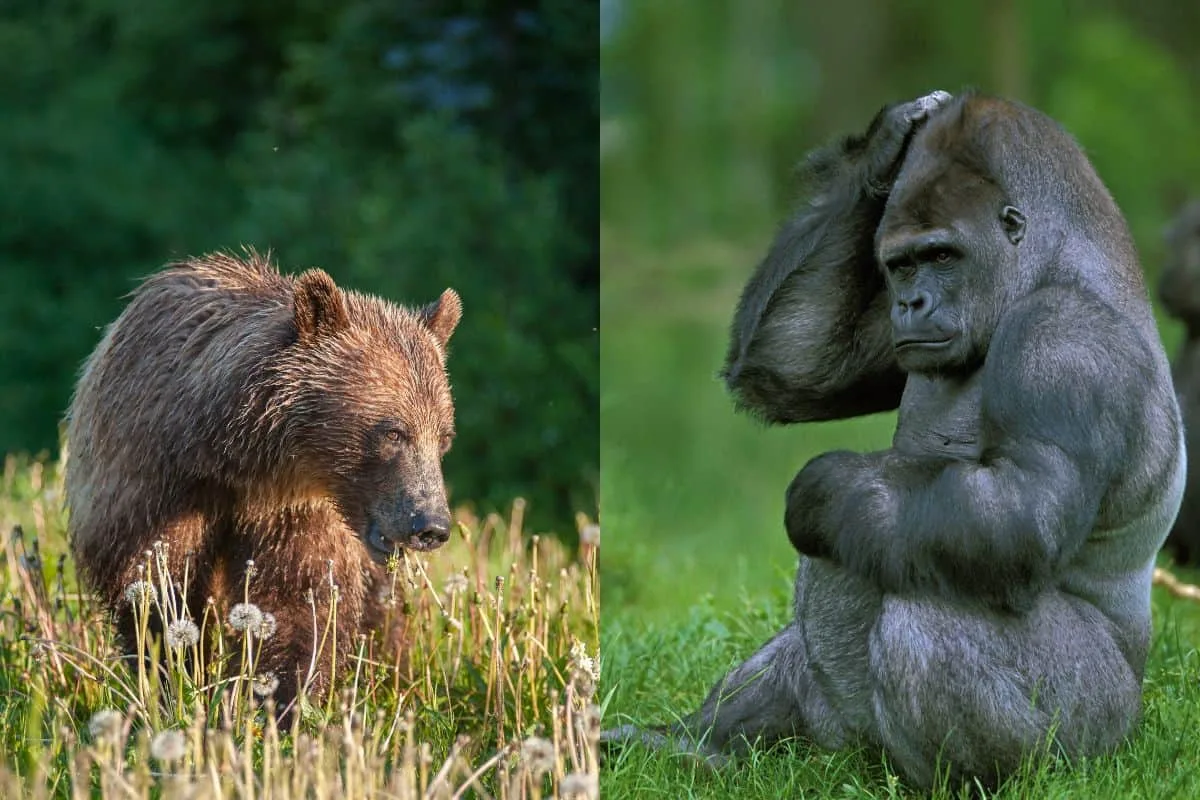
Gorillas are the largest living primates, sharing about 98% of their DNA with humans. A mature silverback male can weigh up to 485 pounds and stand about 5.6 feet tall on two legs. They live in family groups called troops, led by a dominant male who protects the group from threats.
Their strength is legendary. Research suggests a gorilla's upper-body strength is about ten times that of an average human. That's not a fact you want to test in person.
Despite that raw power, gorillas are generally gentle and social animals that eat mostly plants, fruit, and small insects.
You'll find them in the rainforests of Central and West Africa. The two main species are the eastern gorilla and the western gorilla, both classified as critically endangered by the IUCN Red List.
The Grizzly Bear
The grizzly bear is the North American heavyweight. An adult male ranges from 400 to 790 pounds, with some coastal populations hitting 1,000 pounds or more. That prominent hump on their shoulders is pure muscle, giving them the digging power to unearth roots, rodents, and insects.
Unlike gorillas, grizzlies are true omnivores. They eat berries, fish, small mammals, and carrion. During salmon season in Alaska, they can consume up to 90 pounds of fish in a single day.
They're also surprisingly fast, reaching speeds of 35 miles per hour in short bursts.
Source: Web (Bing) / leozoo.org (Web image (fair-use with source credit))
Who Wins in a Showdown?
Short answer: it depends on the context. A grizzly has size, claws, and raw bite force. A gorilla has incredible upper-body strength, agility, and opposable thumbs that allow it to grapple.
In most realistic scenarios, the grizzly would win due to its size advantage and weaponry. But the gorilla's intelligence and ability to use objects as tools gives it a fighting chance in ways you wouldn't expect.
For your everyday purposes, just remember this. Gorillas are the strong, gentle giants of the jungle. Grizzlies are the powerful, opportunistic survivors of the wilderness.
Both are nothing to mess with.
The G-Team's Smaller Stars: Gecko, Gazelle, and the Gopher
Not every G-animal needs a forklift to move around. The smaller members of this list are just as fascinating, often packing more surprising adaptations into their small frames than their larger cousins.
The Gecko
Geckos are lizards found on every continent except Antarctica. Their claim to fame is their feet, which are covered with millions of microscopic hairs called setae. These hairs create a weak molecular attraction called van der Waals forces, allowing geckos to climb glass, ceilings, and almost any surface.
This holds true even in a vacuum, which scientists have tested.
There are over 1,500 known gecko species. The leopard gecko and the crested gecko are popular pets because they're nocturnal, docile, and relatively easy to care for in a terrarium.
The Gazelle
Gazelles are swift, graceful antelopes that roam the savannas and grasslands of Africa and Asia. They're built for speed, reaching up to 60 miles per hour in short sprints. That speed is their primary defence against predators like cheetahs and lions.
They also practice a behaviour called stotting, where they leap high into the air with stiff legs. Some researchers believe this signals fitness to predators, essentially saying "I'm too healthy to catch, go find someone else." Others think it's just a way to scan the horizon for threats. Either way, it's an incredible sight.
The Gopher
Gophers are small burrowing rodents native to North and Central America. They're often mistaken for groundhogs or prairie dogs, but they're actually in their own family of pocket gophers. The name comes from the fur-lined cheek pouches they use to carry food to their underground tunnels.
A single gopher can move up to 2.25 tons of soil per year. That's a lot of digging for a 1-pound rodent. While gardeners sometimes see them as pests, their burrowing aerates the soil and improves water infiltration, which benefits the entire ecosystem.
The G-List's Deep Cuts: Gharial, Gila Monster, and the Gibbon
Most people know giraffes and gorillas. The deeper you go into the alphabet list, though, the more obscure things get. These three species rarely make the top ten, but they're absolutely worth your attention.
The Gharial
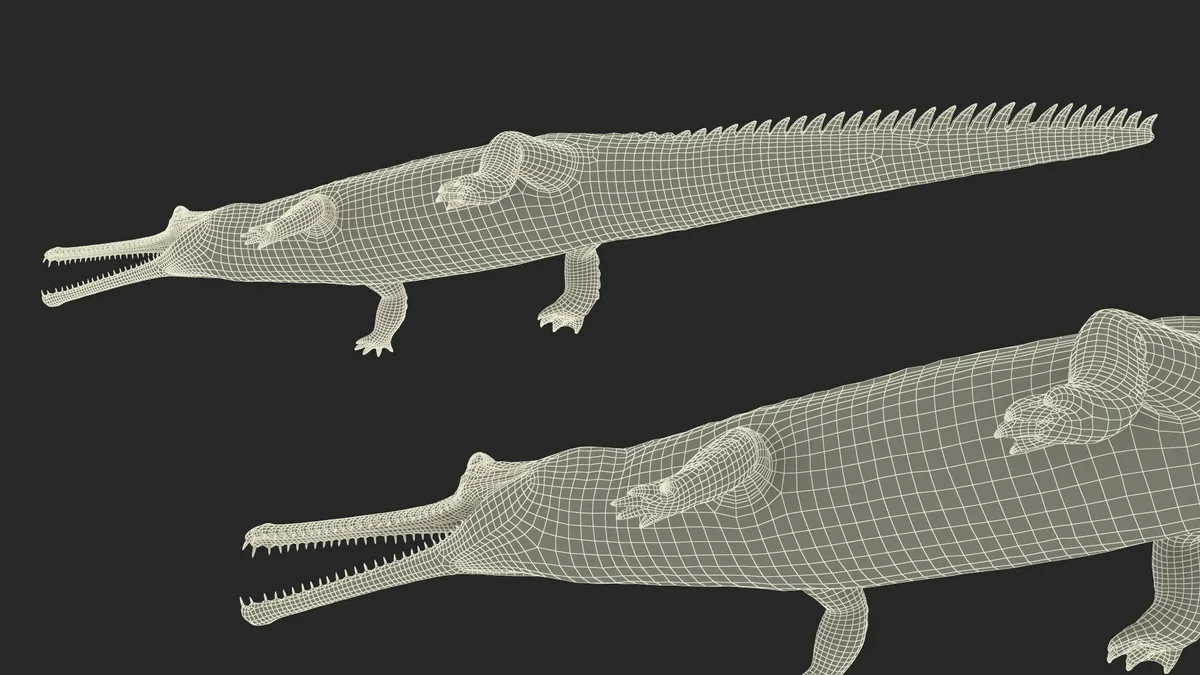
The gharial is one of the most endangered crocodilians on Earth. It's found in the fast-flowing rivers of the Indian subcontinent, and only about 650 mature individuals remain in the wild as of 2026. The IUCN Red List classifies it as critically endangered.
What makes it stand out is its snout. It's long, thin, and filled with interlocking teeth, perfectly adapted for catching fish. Males develop a bulbous growth on the tip of their snout called a ghara, which gives the species its name and is used to produce a buzzing sound during mating.
Source: Bing (Web (fair-use with source credit))
The Gila Monster
The Gila monster is one of only two venomous lizards in the world. It lives in the deserts of the southwestern United States and northwestern Mexico. Its name comes from the Gila River basin in Arizona.
Unlike snakes, which inject venom through fangs, the Gila monster chews its venom into the wound through grooved teeth. The venom is potent enough to cause intense pain, swelling, and a drop in blood pressure, but deaths are extremely rare. Bites typically happen when humans try to handle these slow-moving lizards.
In the US, keeping a Gila monster as a pet is illegal in several states, including Arizona, California, and Nevada. If you're considering an exotic pet, check your local regulations first.
The Gibbon
Gibbons are the acrobats of the primate world. They live in the rainforests of Southeast Asia and swing through the trees using a method called brachiation. Their long arms, which are longer than their body, allow them to cover up to 40 feet in a single swing.
There are about 20 gibbon species, and they're sometimes called "lesser apes" to distinguish them from the great apes like gorillas and chimpanzees. Here's the key difference you should remember. A gibbon is not a monkey.
Monkeys have tails, while gibbons are tailless, just like the great apes.
These calls are among the most complex in the animal kingdom, and they can be heard for over a mile through the dense forest canopy.