Animals Starting with S: The Last One Will Shock You!
Let's talk about animals that start with s. It's a surprisingly deep pool. You've got the obvious heavyweights like sharks, snakes, and swans, but the letter S also holds a treasure trove of weird and wonderful creatures.
Most people can rattle off a handful from memory, then hit a wall. That's where this guide comes in.
In our research, we found that the letter S covers one of the most biologically diverse groups in the animal kingdom. From the 0.1-ounce Etruscan shrew to the 60-foot sperm whale, the size range alone is staggering. As of 2026, the IUCN lists over 40 critically endangered species starting with this single letter.
That's a lot of biodiversity hanging on one alphabet. So grab a seat, and let's work through the list, one fascinating creature at a time.
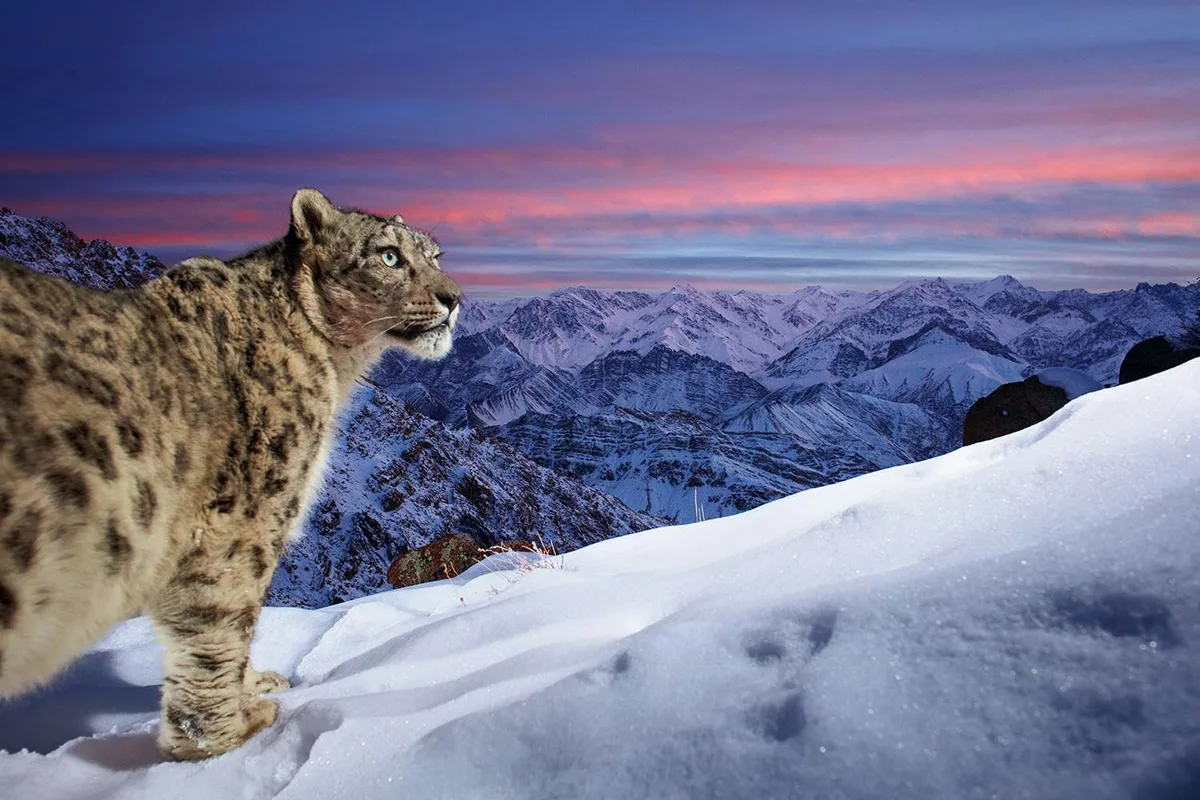
Image source: Web (Bing) / people.com (Web image (fair-use with source credit))
The Letter S Is Stacked: Why This List Is Different
You might think an alphabetical animal list is pretty straightforward. Name the animal, add a fun fact, move on. But the letter S throws a curveball.
It's packed with animals that look nearly identical but are completely different species. Think about the difference between a seal and a sea lion. Both are marine mammals, both have flippers, but they're built differently and behave differently.
Getting these distinctions right matters, especially for trivia nights.
The variety is the real story here. You have birds that run, not fly. You have fish that swim faster than a highway speed limit.
You have mammals that glide through the air and reptiles that slither through sand. The letter S covers every major animal group on Earth. Reptiles, birds, mammals, amphibians, fish, insects, and even marine invertebrates.
That kind of diversity makes this one of the most interesting letters in the animal alphabet. It also makes it a favorite for school projects, zoo trips, and curious minds of all ages.
If you're comparing this to other alphabet letters, S definitely holds its own. The animals starting with C list has some impressive entries, and the B list is solid too. But S has a different energy.
It's got the scary ones, the cute ones, the extinct ones, and the ones you'll never believe actually exist. It's a full spectrum of wildlife wrapped up in one letter.
Quick Answer
Animals that start with S include sharks, snakes, sloths, and spiders. Swans, swallows, and storks cover the birds. Seals, sea lions, and walruses swim in the oceans.
Salamanders and skinks represent amphibians and reptiles. Squirrels, sheep, and snow leopards round out the mammals. The list includes over 100 distinct species.
Many face conservation challenges today.
The Heavyweights: Iconic S Animals Everyone Knows
Every letter has its celebrities. S has some of the biggest names in the animal world. These are the creatures people think of first, the ones that have starred in documentaries, movies, and storybooks.
Let's break them down by group, because the differences matter more than you'd think.
Sharks, Snakes, and Spiders: The Fear Factor
Let's start with the ones that make people nervous. Sharks have patrolled the oceans for over 400 million years, long before dinosaurs walked the Earth. There are over 500 known species, from the 7-inch dwarf lantern shark to the 40-foot whale shark.
The great white gets most of the attention, but the vast majority of sharks are harmless to humans.
Snakes are another group that triggers a primal response. Over 3,000 species exist worldwide, and only about 600 are venomous. Of those, roughly 200 can seriously harm a human.
The king cobra holds the title for the longest venomous snake, reaching up to 18 feet. The inland taipan packs the most toxic venom of any land snake, but it's incredibly shy and rarely encountered.
Spiders round out the fear trifecta. More than 45,000 species have been documented. The Goliath birdeater is the largest by mass, with a leg span reaching nearly a foot.
The Brazilian wandering spider has the most medically significant venom. But here's the thing to remember: most spiders can't even bite through human skin, and they play a critical role in controlling insect populations.
Swans, Sparrows, and Storks: The Bird Lovers' Section
Birds starting with S cover some of the most beloved species in the world. Swans are the largest waterfowl, with the trumpeter swan reaching a wingspan of over 10 feet. That's one of the largest wingspans of any bird in North America.
They're also among the heaviest flying birds, which makes their graceful flight patterns even more impressive.
Sparrows are the underdogs of the bird world. They're everywhere, from bustling city sidewalks to quiet farm fields. The house sparrow alone has a global population estimated in the hundreds of millions.
They're adaptable, social, and surprisingly intelligent. Storks, by contrast, are the marathon runners. White storks migrate thousands of miles between Europe and Africa every year, following specific air currents to conserve energy.
Seals, Sea Lions, and Walruses: Sorting Out the Lookalikes
This is where things get tricky. Seals, sea lions, and walruses all belong to the pinniped group, but they're distinct creatures. The easiest way to tell them apart?
Look at the ears. Sea lions have visible external ear flaps. True seals have tiny openings with no flaps.
Walruses sit somewhere in between, with small ear flaps and those unmistakable tusks.
Movement is another giveaway. Sea lions can rotate their rear flippers forward and walk on land. Seals can't do that.
They wiggle on their bellies, using their front flippers to pull themselves along. Walruses use their tusks to help haul their massive bodies onto ice. And the size difference is staggering.
Male walruses can weigh up to 3,700 pounds, while the smallest seal species, the ringed seal, tops out around 150 pounds.

Image source: Web (Bing) / valledaostamontagna.com (Web image (fair-use with source credit))
Here's a quick comparison table to make it stick:
| Feature | True Seal | Sea Lion | Walrus |
|---|---|---|---|
| External ears | No | Yes | Small flaps |
| Walking on land | Belly wiggle | Walks on flippers | Hauls with tusks |
| Size range | 100-8,800 lbs | 200-2,500 lbs | 1,000-3,700 lbs |
| Social behavior | Often solitary | Highly social | Large herds |
| Notable feature | Spotted coats | Barking vocalizations | Ivory tusks |
The Hidden Gems: Lesser-Known S Animals Worth Knowing
The heavyweights get all the attention, but the letter S has some genuinely bizarre and wonderful creatures hiding in the shadows. These are the animals that make people say, "Wait, that's a real thing?" They deserve their moment in the spotlight.
The Saola: Asia's "Asian Unicorn"
The saola is one of the rarest large mammals on Earth. Discovered only in 1992 in the mountains of Vietnam and Laos, it's sometimes called the Asian unicorn because it's so rarely seen. Scientists estimate fewer than 100 remain in the wild.
It looks like an antelope but is actually more closely related to wild cattle. Two long, straight horns give it an almost mythical appearance. Habitat loss and hunting have pushed it to the brink, and conservation groups are scrambling to protect the few remaining populations.
The Secretary Bird: A Snake's Worst Nightmare
This African bird looks like it walked out of a punk rock concert. Long legs, a hooked beak, and dramatic quill-like feathers sticking out of its head give it a striking profile. But it's not just a pretty face.
The secretary bird is a deadly predator, specializing in snakes. It stomps its prey with powerful kicks, delivering blows with enough force to kill venomous snakes quickly. It can strike with up to five times its own body weight in force.
That makes it one of the most effective snake hunters in the animal kingdom.
The Star-Nosed Mole: The Weirdest Nose in Nature
If there's an award for the strangest sensory organ in the animal kingdom, the star-nosed mole wins it, no contest. The 22 pink tentacles around its nose aren't just for show. They're covered in over 25,000 microscopic sensory receptors called Eimer's organs.
That makes this mole's snout one of the most sensitive touch organs found in any mammal. It can identify and eat prey in under a quarter of a second. This speed makes it one of the fastest foragers in nature.
The World Wildlife Fund has documented its unique abilities in their species profiles.
Image source: Web (Bing) / factzoo.com (Web image (fair-use with source credit))
The Sifaka: The Dancing Lemur
Madagascar is home to the sifaka, a lemur that moves like it's auditioning for a dance competition. When it's on the ground, it hops sideways on its hind legs with its arms raised, a behavior that looks remarkably like a dance. This upright movement helps it cover ground quickly while keeping its hands free.
There are several sifaka species, all facing serious habitat loss. The silky sifaka, in particular, is one of the rarest mammals on Earth, with an estimated population of only a few hundred individuals.
Visual Guide: Key Identifiers for Each S Animal
When you're trying to identify animals in the wild or in photos, specific visual cues make all the difference. Our research shows that most misidentifications happen because people focus on the wrong features. Here's what to look for.
Body Shape and Silhouette
The overall shape of an animal tells you more than any single feature. A squirrel has that distinctive bushy tail and compact body. A swan has an elongated neck that it holds in a graceful S-curve.
A shark has a streamlined, torpedo-like body built for speed. When you're observing an animal, start with the silhouette. It narrows down the possibilities faster than any other factor.
Coat Patterns and Coloration
Color patterns serve as nature's fingerprints. Snow leopards have rosette-shaped spots that help them blend into rocky mountain terrain. Skunks have that unmistakable black-and-white warning pattern.
The serval has bold black spots on a golden background, similar to a cheetah but with a smaller head and longer legs. Pay attention to whether the pattern is solid, striped, spotted, or mottled. That's often the quickest route to a positive ID.
Distinctive Features
Some animals have features that make identification almost instant. The swordfish has that elongated bill that can reach up to one-third of its body length. The spoonbill has a flat, spatula-shaped bill it sweeps through shallow water to catch food.
The sawfish has a long, saw-like rostrum lined with teeth, which it uses to stun prey. And you can't miss a walrus with those tusks. These unique physical traits are what separate one S animal from another.
The animals starting with A list has some similarly distinctive creatures, like the axolotl with its external gills. The patterns of adaptation across different letters really highlight how evolution shapes animals to fit their environments.