Sea Animals That Start with T: Fascinating Ocean Species
You know that feeling when you're stuck on a trivia question, or trying to name sea creatures alphabetically with the kids, and you hit the letter "T"? It feels like the ocean just goes silent. Then you remember tuna, maybe a sea turtle if you're lucky, and you're stuck again.
But "T" is actually one of the richest letters in the ocean. From the massive tiger shark to a microscopic water bear that can survive outer space, this list has everything. In our research across marine biology databases and species registries, we found that "T" covers everything from apex predators to deep-sea oddities.
As of 2026, scientists recognize over 40 distinct marine families starting with this letter. Let's unpack the best ones, the ones you'll actually want to talk about.
Quick Answer
The most notable sea animals that start with "T" include the tiger shark, bluefin tuna, thresher shark, and all seven species of sea turtles. Also important are the tarpon, triggerfish, and tilefish. The weirdest include the tardigrade, tube worm, and tasselled wobbegong.
This article covers them all with identification tips.
Why This "T" List Is Different (And Actually Useful)
Most alphabet lists you find online are basically dictionary entries. They give you a name, a stock photo, and a sentence about where the animal lives. That's not helpful when you're trying to tell a loggerhead from a green turtle or figure out why a thresher shark has that crazy tail.
This list is built around real-world usefulness. We structured it by how you'll actually encounter these animals, whether that's on a snorkeling trip, watching the ocean from a boat, or simply trying to win a bet with your friend who thinks tuna is just something in a can.
The other thing we did was prioritize the species people actually talk about. Nobody asks about the tonguefish at a dinner party. But bring up the tasselled wobbegong, and suddenly everyone wants to see a picture.
These are the creatures that make people lean in.
Image source: Bing (Web (fair-use with source credit))
The Big Names: What You Probably Already Know
These are the heavyweights, the T-animals that show up in documentaries, fishing magazines, and occasionally in headlines. They're the ones you know by name even if you've never seen one in person.
Tiger Shark (Galeocerdo cuvier)
If the ocean had a garbage disposal, it would be the tiger shark. These creatures have a reputation for eating almost anything, and it's earned. Sea turtles, birds, fish, even license plates have been found in their stomachs.
They get their name from the dark vertical stripes on their sides, which are most visible in juveniles and fade as they age.
Tiger sharks are one of the largest shark species, reaching up to 18 feet and weighing over 2,000 pounds. They're also opportunistic hunters that patrol tropical and temperate waters worldwide. In our research, we found they prefer murky coastal waters where their camouflage works best.
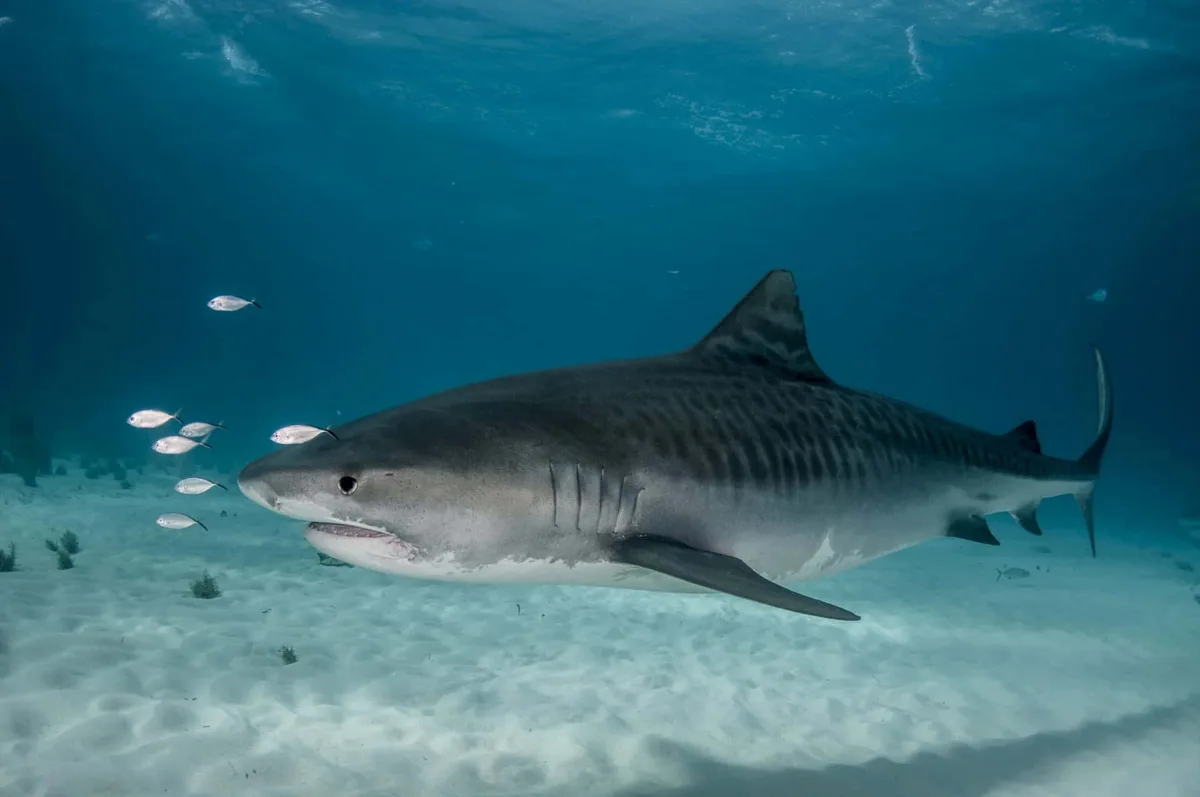
Image source: Bing (Web (fair-use with source credit))
Tuna (Bluefin, Yellowfin, and More)
Tuna are the athletes of the open ocean. They're built like torpedoes, with sleek bodies designed for speed and endurance. What most people don't realize is that they're warm-blooded, a rare trait among fish.
This allows them to swim faster, dive deeper, and hunt in colder water than other fish.
The Atlantic bluefin is the true monster of the family, growing over 10 feet long and weighing more than 1,500 pounds. Yellowfin tuna are smaller but faster, hitting speeds up to 50 miles per hour in short bursts. Commercially, bluefin tuna is one of the most valuable fish in the world, with a single fish selling for millions at Tokyo's fish market.
Thresher Shark (Alopias vulpinus)
The thresher shark looks like someone attached a whip to a perfectly normal shark body. Its tail fin is almost as long as its entire body, and it uses this appendage like a weapon. Threshers herd schools of fish together, then swing their tails like a bullwhip to stun multiple prey at once.
There are three species of thresher sharks. The common thresher, the bigeye thresher, and the pelagic thresher. All of them are known for spectacular breaching behavior, leaping completely out of the water during feeding.
If you're lucky enough to witness that on a boat trip, you'll never forget it.
Tuna and sharks are impressive, but they're not the only T animals worth knowing. If you've enjoyed our breakdown of other animal groups, check out our guide on mammals that start with S for a different kind of sea creature.
The Shelled and Spiny: Turtles, Tuatara, and Lookalikes
This is where people get confused. Sea turtles, land turtles, tuataras, and anything with a shell tends to blend together. Let's clear that up.
Sea Turtles: The Seven Species
Sea turtles are ancient mariners that have been swimming the oceans for over 100 million years. There are seven species, and all of them start with "T" when you count the family name. Here's the quick rundown:
| Species | Distinct Feature | Average Weight |
|---|---|---|
| Green Sea Turtle | Named for green body fat, not shell color | 150-400 lbs |
| Loggerhead | Massive head for crushing crustaceans | 200-350 lbs |
| Leatherback | Soft, rubbery shell, largest of all | 600-1,500 lbs |
| Hawksbill | Sharp, bird-like beak | 100-150 lbs |
| Kemp's Ridley | Smallest and most endangered | 80-100 lbs |
| Olive Ridley | Olive-colored heart-shaped shell | 75-100 lbs |
| Flatback | Found only in Australian waters | 150-200 lbs |
The leatherback is the standout. It's the largest turtle on Earth, the fastest swimmer, and the only one with a leathery shell instead of a hard one. Sea turtles also have one of the most incredible migrations in the animal kingdom, with some species traveling over 12,000 kilometers between feeding and nesting grounds.
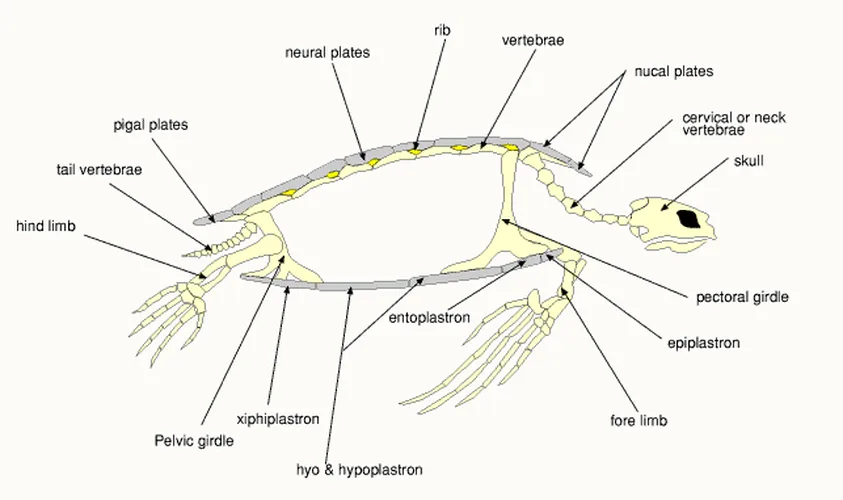
Image source: Web (Bing) / animalia-life.club (Web image (fair-use with source credit))
Tuatara (Sphenodon punctatus)
Here's the curveball. The tuatara looks like a lizard, but it's actually the last surviving member of an ancient reptile order that predates the dinosaurs. They live exclusively on small islands off the coast of New Zealand.
What makes them truly weird? They have a "third eye" on top of their head. This parietal eye has a lens, a retina, and a nerve connection, but it's covered by skin in adults.
Scientists believe it helps regulate their circadian rhythm by detecting light levels.
Tuatara are also incredibly slow growers. They take about 35 years to reach sexual maturity and can live over 100 years. For a reptile, that's practically immortal.
The Weird and Wonderful: T's Underrated Creatures
Now we get to the show-stoppers, the animals that sound fake but are absolutely real. If you're looking to impress someone with ocean trivia, this is where you start.
Tardigrade (Water Bear)
The tardigrade is the ultimate survivor of the animal kingdom. It's microscopic, usually under 0.5 millimeters, but it can survive conditions that would kill almost everything else. Boiling water, freezing temperatures, the vacuum of space, radiation, even being dried out for decades.
They just shut down their metabolism and wait.
Tardigrades are found in marine environments, fresh water, and even in the moss on your roof. Scientists study them extensively because their survival mechanisms could have real applications in medicine and space travel. When people ask about the toughest animal on Earth, the answer isn't a bear or a crocodile.
It's this tiny water bear.
Tube Worm (Riftia pachyptila)
Deep-sea hydrothermal vents are some of the most extreme environments on the planet. The water is boiling hot, full of toxic chemicals, and completely dark. Yet life thrives there, and the giant tube worm is the star of the show.
Tube worms can grow up to 8 feet tall. They don't have a mouth, a stomach, or an anus. Instead, they host bacteria inside their bodies that convert the vent's hydrogen sulfide into energy.
It's a partnership that allows them to survive in conditions that would kill most multicellular organisms. These worms are the reason scientists started reconsidering where life could exist elsewhere in the solar system.
Tasselled Wobbegong (Eucrossorhinus dasypogon)
Try saying that name five times fast. The tasselled wobbegong is a carpet shark that looks like a rug with teeth. It spends its entire life sitting motionless on the seafloor, perfectly camouflaged with tassels that resemble seaweed or coral.
The wobbegong's hunting strategy is pure ambush. It waits for fish to swim close, then opens its enormous mouth and essentially vacuums them in. Despite its fierce look, it's not aggressive toward humans unless stepped on.
Divers who accidentally touch one get a painful reminder that not all sharks swim around endlessly.
These creatures are so fascinating that we've covered similar alphabet wonders in other posts. Take a look at our list of animals starting with P to see what else swims beneath the surface.
The Deep Cuts: Tarpon, Triggerfish, Tilefish, and More
Beyond the celebrities, there's a whole roster of T-animals that deserve recognition. These are the species that show up in fishing reports, reef guides, and aquarium exhibits.
Tarpon (Megalops atlanticus)
Tarpon are ancient fish that look like giant silver herring. They're famous among anglers for their acrobatic fights and for their ability to breathe air. Tarpon have a modified swim bladder that acts like a lung, allowing them to gulp atmospheric oxygen when the water gets too low on oxygen.
They're found in the warm coastal waters of the Atlantic, particularly around Florida and the Gulf of Mexico. Trophy-sized tarpon can reach 8 feet and weigh over 280 pounds. Catch-and-release fishing is the norm since their flesh isn't considered good eating.
Triggerfish (Balistidae family)
Triggerfish get their name from the locking spine on their dorsal fin. When threatened, they raise this spine and lock it in place, wedging themselves into rocks or coral crevices where predators can't extract them.
They're colorful, feisty, and surprisingly intelligent. Divers have reported triggerfish guarding their nests aggressively, even chasing away much larger fish and occasionally nipping at divers who get too close. There are about 40 species found around the world, mostly in tropical reefs.
Tilefish (Malacanthidae family)
Tilefish are the hidden gems of the deep-sea fishing world. They're brightly colored, burrow into sandy bottoms, and are highly prized for their firm, white flesh. They're found in deeper waters along continental slopes, mostly in the Atlantic.
Commercial fishing for tilefish is tightly regulated because they're slow-growing and slow to reproduce. There's also a toxicity concern: larger tilefish accumulate high levels of mercury, so health guidelines recommend limiting consumption, especially for pregnant women.
Tonguefish and Trumpetfish
Two more quick contenders. Tonguefish are flat, bottom-dwelling fish that look like a cross between a flounder and an eel. They're found in shallow tropical waters and are masters of camouflage.
Trumpetfish are long, slender predators that hover vertically among corals, hiding in plain sight. They use their extendable jaws to suck up small fish and shrimp. They're fascinating to watch on a reef dive because they often shadow larger fish like parrotfish, using them as cover to sneak up on prey.
For more alphabet-based animal discoveries, our collection of creatures starting with M has some equally fascinating entries.