Sea Animals Starting with P: P is for Pufferfish
You've probably found yourself wondering which sea animals start with P, whether for a trivia night, a school project, or just idle curiosity while watching a nature documentary. The ocean is absolutely packed with creatures that begin with this letter, from the familiar penguin to the bizarre peacock mantis shrimp. This letter might just be the most interesting one in the marine alphabet.
In our research, we've cataloged over 15 notable species that call the ocean home, each with unique adaptations that push the boundaries of what we think possible in nature. As of 2026, marine biologists continue discovering new behaviors and species within this group. The letter P covers everything from birds that fly underwater to fish that produce sand, so let's dive straight into the deep end.
Why Sea Animals That Start With P Are Worth Knowing
The letter P holds a special place in marine biology. It covers an enormous range of creatures, spanning multiple phyla, habitats, and evolutionary strategies. You've got birds like penguins that traded flight for swimming, fish like pufferfish that inflate like balloons, and invertebrates like pistol shrimp that create sonic booms with their claws.
What makes this group so fascinating isn't just the variety, though. It's how each animal has solved the core problems of survival in completely different ways. Some evolved venom, others developed speed, and a few simply decided to look ridiculous enough that predators leave them alone.
Understanding these animals also helps you appreciate the interconnectedness of ocean ecosystems. When you learn that parrotfish produce beach sand by eating coral, or that sea otters keep purple sea urchin populations in check, you start seeing the ocean as a complex web rather than a collection of isolated creatures.
The real payoff comes when you encounter these animals in the wild. Snorkeling through a reef becomes infinitely more exciting when you can identify a peacock mantis shrimp hiding in its burrow or spot a school of Pacific bluefin tuna passing below. Knowledge transforms a pretty scene into a living story.
The Complete List: 15 Animals That Begin With P
Let's get into the meat of this list. We've organized these creatures into four groups based on where they live and how they behave, which makes them easier to remember and compare.
The Aerial Artists: Pelicans, Puffins, and Penguins
These birds all spend significant time in the ocean, but each has a completely different approach to making a living.
Pelicans are the scoops of the bird world. They have a gular pouch that can hold up to three gallons of water and fish in a single sweep. You'll spot them gliding in formation along coastlines worldwide, looking prehistoric with their oversized beaks and steady wingbeats.
Puffins are the comedians of the northern seas. Often called "sea parrots" for their bright striped beaks, they're surprisingly agile underwater, "flying" through the water to catch small fish. They can carry up to a dozen fish in their beaks at once, lined up like sardines in a can.
Penguins need no introduction, but here's a fact you might not know. They spend up to 75% of their lives in the water and can dive deeper than 1,500 feet. Their flipper-like wings and dense bones make them powerful swimmers, reaching speeds that rival small boats.
The Reef Residents: Pufferfish, Parrotfish, Pipefish, and Pistol Shrimp
If you've ever gone snorkeling, you've likely crossed paths with one of these reef dwellers.
Pufferfish are defensive masters. When threatened, they inhale water rapidly, turning into a spiky ball that most predators can't swallow. Some species carry tetrodotoxin, a potent neurotoxin that's deadly to humans if the fish is improperly prepared, which is why fugu chefs in Japan need special licenses.
Parrotfish look like they raided a paint store, with vivid colors that shift as they mature. They use their beak-like fused teeth to scrape algae off coral, and here's the wild part. They grind up the coral and excrete it as fine white sand.
A single parrotfish can produce up to 200 kilograms of sand per year. That pristine tropical beach you love, partially parrotfish poop.
Pipefish are seahorses that straightened out. They're long, thin, and perfectly camouflaged to hide in seagrass beds. Like their seahorse relatives, the males carry the eggs until they hatch, a rare example of male pregnancy in the animal kingdom.
Pistol Shrimp sound like science fiction, but they're completely real. They have one oversized claw that snaps shut so fast it creates a bubble that collapses with a shockwave, stunning or killing small fish. The snap produces a sound louder than a gunshot and generates temperatures approaching the sun's surface, albeit on a microscopic scale.
The Open-Ocean Giants: Pilot Whales and Pacific Bluefin Tuna
These are the heavy hitters of the open sea.
Pilot Whales are actually a species of oceanic dolphin, despite the name. They travel in tight-knit pods led by a matriarch, and they're known for their strong social bonds. Scientists believe the name comes from the mistaken idea that one whale acts as a designated pilot guiding the group.
Pacific Bluefin Tuna are built like torpedoes. They can swim at speeds up to 40 miles per hour and dive to depths exceeding 3,000 feet. Uniquely among fish, they're warm-blooded, which gives them a significant speed and stamina advantage in cold waters.
The Deep-Sea Oddballs: Patagonian Toothfish, Portuguese Man O' War, and Polychaete Worms
These creatures occupy the stranger corners of the marine world.
Patagonian Toothfish probably sounds unfamiliar, but you likely know it as Chilean sea bass, a marketing name that made this ugly-named fish a culinary celebrity. They live in the deep, cold waters of the Southern Ocean and can live for 50 years, growing slowly, which makes them vulnerable to overfishing.
Portuguese Man O' War is not a jellyfish, despite appearances. It's a siphonophore, a colony of specialized organisms working together as one. Its tentacles extend up to 30 feet, armed with nematocysts that deliver an intensely painful sting, which is why you should never touch one washing up on the beach.
Polychaete Worms are the unsung heroes of the ocean floor. These segmented worms, often called bristle worms, come in thousands of species that burrow through sediment, recycle nutrients, and serve as food for countless fish and invertebrates. They might not be glamorous, but the ocean needs them badly.
Featured Spotlight: The Peacock Mantis Shrimp
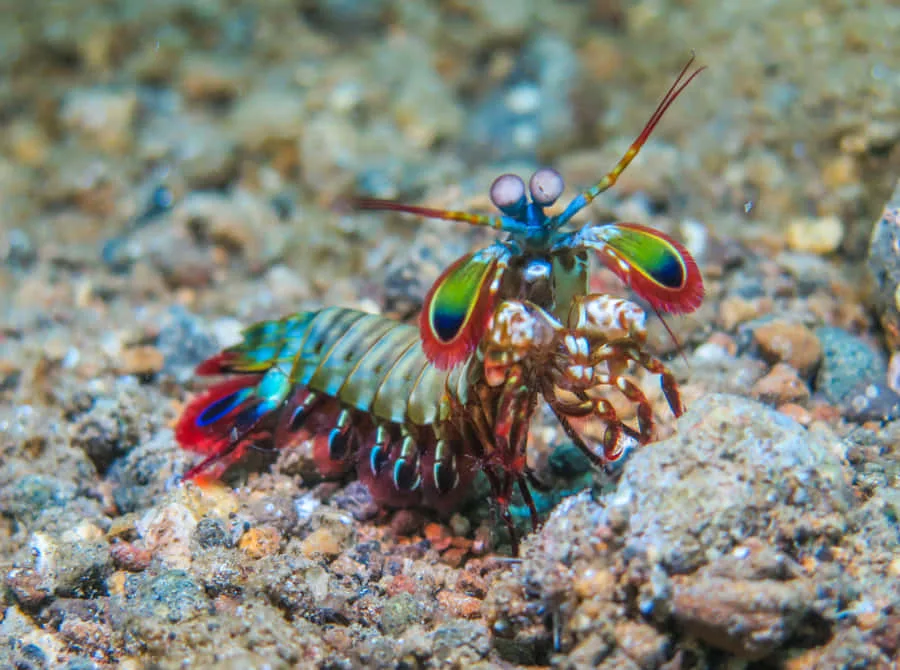
Image source: Bing (Web (fair-use with source credit))
If there's one animal on this list that deserves its own spotlight, it's the peacock mantis shrimp. This creature looks like it lost a fight with a rainbow, but its beauty hides one of the most extreme hunting mechanisms in the animal kingdom.
The peacock mantis shrimp has club-like appendages that can strike with the force of a .22 caliber bullet. The strike accelerates faster than a bullet from a gun, generating enough force to shatter crab shells and even crack aquarium glass. There are documented cases of these shrimp breaking out of their tanks in home aquariums.
On top of that, they have arguably the most complex eyes in the animal kingdom. They possess up to 16 types of photoreceptor cells, compared to our three, meaning they see colors we can't even imagine. They can detect ultraviolet, infrared, and polarized light, giving them an almost supernatural awareness of their surroundings.
For any enthusiast interested in sea animal species, the peacock mantis shrimp is a must-know creature that showcases nature's extremes.
Quick Reference Table: Key Facts at a Glance
Here's a quick cheat sheet for all the P animals we've covered. Bookmark this table for your next trivia night or aquarium visit.
| Animal | Type | Primary Habitat | Notable Feature |
|---|---|---|---|
| Pufferfish | Fish | Tropical reefs | Inflation defense, tetrodotoxin |
| Parrotfish | Fish | Coral reefs | Produces beach sand |
| Pistol Shrimp | Crustacean | Sandy bottoms | Sonic snap, cavitation bubble |
| Peacock Mantis Shrimp | Crustacean | Reef burrows | Speed punch, complex eyes |
| Pelican | Bird | Coasts worldwide | Gular pouch for scooping |
| Puffin | Bird | North Atlantic | Carries fish in beak |
| Penguin | Bird | Southern Hemisphere | Dives over 1,500 feet |
| Pilot Whale | Dolphin | Open ocean | Matriarchal pods |
| Pacific Bluefin Tuna | Fish | Open ocean | Warm-blooded, 40 mph |
| Patagonian Toothfish | Fish | Southern Ocean | Lives 50+ years |
| Portuguese Man O' War | Siphonophore | Ocean surface | Deadly tentacles |
| Purple Sea Urchin | Echinoderm | Eastern Pacific | Can devastate kelp forests |
| Pipefish | Fish | Seagrass beds | Male carries eggs |
Safety & Awareness: Handling Critters With Care
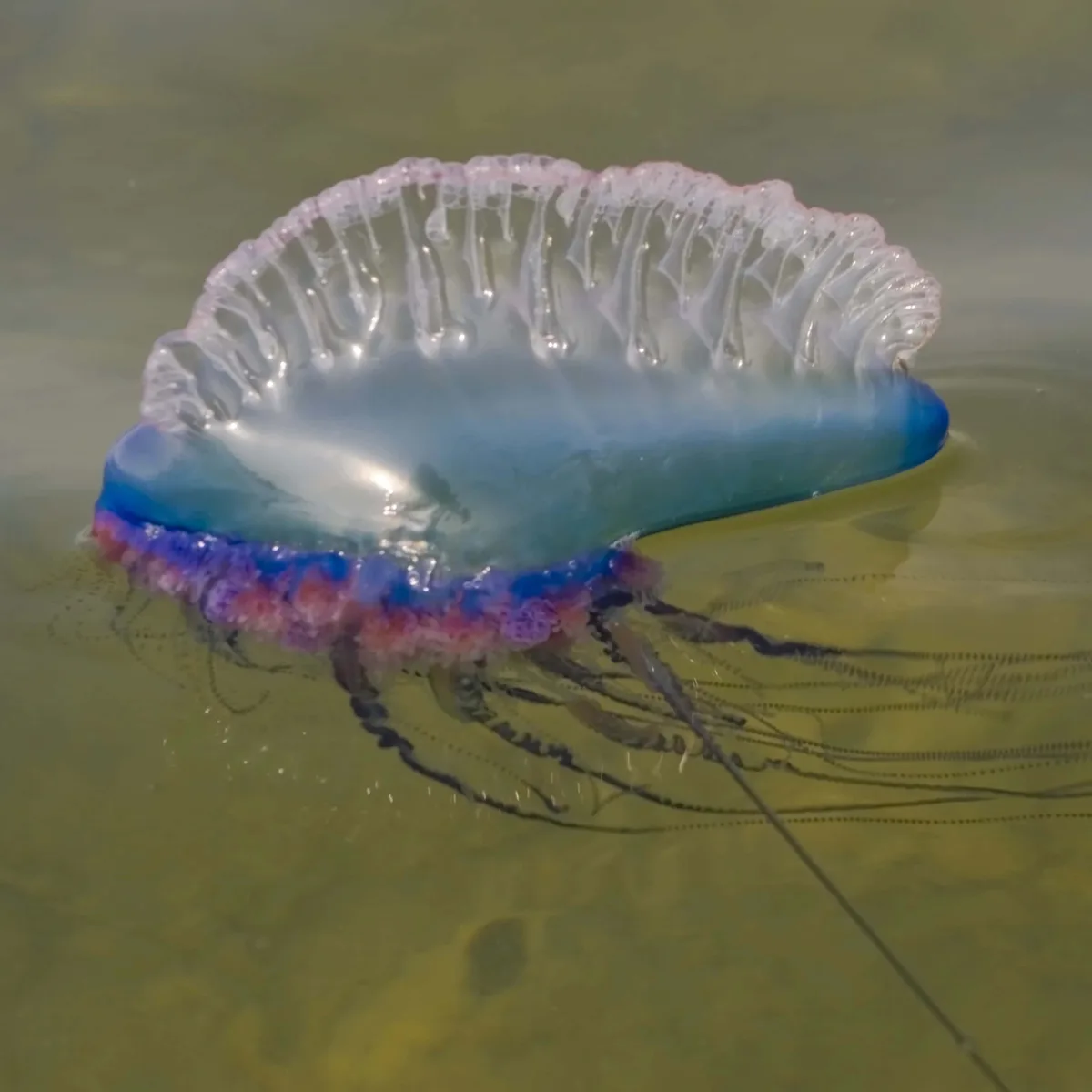
Image source: Bing (Web (fair-use with source credit))
Some of these animals deserve respect from a safe distance. The Portuguese man o' war tops that list. Its tentacles can extend 30 feet below the surface, and its sting can cause severe pain, respiratory distress, and allergic reactions in sensitive individuals.
If you see one washed up on the beach, keep children and dogs away, and do not touch it, even if it looks dried out.
Pufferfish carry a threat that's mostly culinary. Tetrodotoxin is one of the most potent natural poisons known, with no antidote. In Japan, only licensed chefs can prepare fugu, and even then, a single mistake can be fatal.
As a tourist tip, don't order fugu from unlicensed vendors, no matter how adventurous you feel.
The peacock mantis shrimp has a different kind of danger. Its strike can break aquarium glass and cause serious hand injuries if you accidentally grab one while cleaning a tank or reaching into a crevice. Always wear thick gloves when handling live rock or reef structures.
Even seemingly harmless creatures like sea urchins deserve caution. Stepping on a purple sea urchin means dealing with broken spines that can become embedded in your foot, potentially causing infection. Wear reef-safe water shoes when wading in rocky areas.
Mistakes to Avoid: Misidentification and Common Errors
The most common mistake people make with these animals is assuming a Portuguese man o' war is a jellyfish. It's not. A jellyfish is a single organism, while a man o' war is a colony of specialized polyps working as one.
That distinction matters, because the sting treatment differs. Vinegar works for jellyfish, but for man o' war stings, you should rinse with saltwater and seek medical attention.
Another frequent error is lumping all pufferfish into the "deadly" category. While many carry tetrodotoxin, not every species is equally toxic, and the toxin levels vary by season and location. That said, the safest assumption is that any pufferfish requires expert preparation.
Don't test your luck.
Marine identification is full of these traps. Pilot whales are often mistaken for orcas or common dolphins by casual observers. Patagonian toothfish gets confused with cod, which is why the misleading marketing name "Chilean sea bass" stuck.
And purple sea urchins are frequently assumed harmless because they look like static pincushions, until one finds its way into your foot.
Before wading in rocky tide pools, remember that peacock mantis shrimp inhabit burrows under rocks. If you're not sure what's living in a crevice, keep your fingers out. For anyone interested in other underwater wildlife, the same rule applies everywhere, look carefully before you touch.
Conservation Snapshot: Which P-Animals Need Our Help

Image source: Web (Bing) / animalia-life.club (Web image (fair-use with source credit))
The Pacific bluefin tuna is the poster child for overfishing concerns. The International Union for Conservation of Nature lists it as a vulnerable species, and some regional populations have dropped by over 90% since the mid-twentieth century. Demand for sushi drives this pressure, and captive breeding has yet to make a significant dent.
Patagonian toothfish faces a similar story with a slower burn. Because they live 50 years and mature late, they can't reproduce fast enough to keep pace with commercial fishing. Strict quotas and catch documentation now help, but illegal fishing remains a concern in remote Southern Ocean waters.
Purple sea urchins present the opposite problem. In parts of the eastern Pacific, they've exploded in number because sea otters, their main predator, were hunted to near extinction. Wait, that's the problem, yes, but it creates a cascading effect.
Urchins devour kelp forests, which destroys habitat for countless other species. Kelp loss also removes a major carbon sink.
Parrotfish play a vital role in coral reef health. When overfished, algae can smother corals. Marine protected areas that ban parrotfish harvest consistently show healthier reefs.
You can support conservation efforts by choosing sustainable seafood and supporting marine reserves.
Looking for more fascinating creatures from the animal kingdom? Check out our other alphabet guides.
Frequently Asked Questions
What is the largest sea animal that starts with P?
The pilot whale takes that title. Females can reach 16 feet and weigh up to 2,300 pounds, while males grow even larger, up to 20 feet. Pacific bluefin tuna rival them in length but not in sheer bulk, topping out around 1,000 pounds.
Is a Portuguese man o' war a jellyfish?
No. It belongs to a group called siphonophores, which are colonies of specialized animals working together. Each part, the float, the tentacles, the digestive polyps, performs a different job.
Despite the shared stinging cells, its biology and treatment differ from true jellyfish.
Are pufferfish safe to eat?
Only when prepared by a licensed professional. The tetrodotoxin found in many pufferfish is a potent neurotoxin with no known antidote. One mistake in preparation can be fatal.
In Japan, fugu chefs train for years and must pass a rigorous certification exam.
Which sea animal starting with P produces sand?
The parrotfish. It scrapes algae from coral with its beak, ingests the coral pieces, and excretes the indigestible material as fine sand. Research from the Smithsonian indicates a single parrotfish can generate hundreds of pounds of sand annually.
Can pufferfish live in home aquariums?
Yes, but it's not for beginners. Many species grow over a foot long, require pristine water quality, and need a varied diet. They also have powerful beaks that can crack aquarium equipment.
If you're committed, research your specific species carefully. You might also enjoy exploring other alphabet lists for inspiration.
The Final Word: Why "P" Is the Ocean's Most Interesting Letter
There's no other letter in the ocean alphabet with this much range. You've got birds that swim, fish that fly through water at 40 miles per hour, and shrimp that punch harder than a heavyweight boxer. P covers the entire spectrum of marine life strategies.
What ties them all together is adaptation. Every one of these animals solved the universal problems of finding food and avoiding predators in a radically different way. That's what makes studying them so rewarding.
The ocean isn't just a big blue void. It's a crowded neighborhood filled with characters.
We've covered 15 species, but the list barely scratches the surface. Plankton alone includes thousands of species, and polychaete worms might number in the tens of thousands more. The letter P is less a category and more an invitation to keep exploring.
So the next time you spot a puffin returning to its burrow or see a parrotfish cruisin' the reef, you'll know a little more about its story. For more like this, peruse our complete wildlife series. Happy exploring.