X-traordinary Reptiles: Species Starting With X
Ask most people to name reptiles that start with X and you'll probably get a blank stare. That's fair. Almost none of these animals carry a common English name beginning with X.
The scientific genera, though, run surprisingly deep.
Per the Reptile Database, the global standard for squamate taxonomy, roughly 15 X-named genera span snakes and lizards across four continents. As of 2026, several of those groups are still being reclassified as DNA work rewrites old family trees. That constant renaming makes careful visual identification more valuable than ever.
Here's what exists, what it looks like, and how to tell the difference.
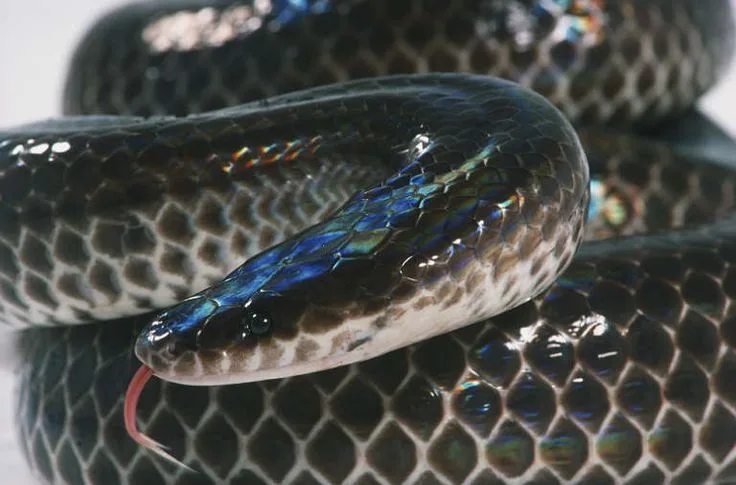
Image source: Web (Bing) / pinterest.com (Web image (fair-use with source credit))
Quick Answer: Yes, There Are X-Reptiles (Here's the List)
At least 15 reptile genera start with X. The main snakes are Xenopeltis, Xenodermus, Xenodon, and Xerotyphlops. The main lizards are Xantusia, Xenosaurus, and Xenagama.
Most are small, secretive, and rarely seen. None are commonly kept as pets.
That's the short version. Here's the full roster, using current accepted scientific names.
| Group | Genus | Species count | Region |
|---|---|---|---|
| Snakes | Xenopeltis | 2 | Southeast Asia, southern China |
| Snakes | Xenodermus | 1 | Indonesia, Malaysia |
| Snakes | Xenodon | ~20 | Central and South America |
| Snakes | Xenocalamus | 8 | Sub-Saharan Africa |
| Snakes | Xerotyphlops | ~22 | Africa, Mediterranean, Central Asia |
| Snakes | Xylophis | 7 | India, Sri Lanka |
| Snakes | Xyelodontophis | 1 | Tanzania |
| Snakes | Xenophidion | 2 | Southeast Asia |
| Lizards | Xantusia | ~40 | Southwestern US, Mexico |
| Lizards | Xenosaurus | ~20 | Mexico, Central America |
| Lizards | Xenagama | 5 | East Africa |
The X-letter naming puzzle isn't limited to reptiles. Mammals have the same quirk, and there's a full breakdown of that letter-X gap in mammals on this site.
Why Visuals Are the Only Way to Make Sense of X-Reptiles
You can't identify an X-reptile from its name alone. X names are scientific genera, not common labels. A "sunbeam snake" doesn't sound like an X species until you see the genus tag.
A "dragon snake" even less so.
Looking across our research, every reliable identification comes down to three visual features: scale texture, head shape, and tail structure. The differences are dramatic. Xenopeltis has mirror-smooth scales that split light into a rainbow.
Xenodermus looks like a snake wearing ribbed armor. Xenosaurus is basically a pancake with legs.
No amount of written description replaces seeing those traits side by side. So when you're researching these animals, pay attention to scale rows, pupil shape, and body proportions. Those three features alone rule out more than half the genus list.
Range maps come second, but they still matter. Xantusia only lives in the American southwest. Xenagama never leaves East Africa.
Location acts as a final filter on top of the visual evidence.
The Master List: X-Starting Snake Genera (With Visual Notes)
Snakes dominate the X-list. Nine genera spread across every continent except Europe and Antarctica. Some are famous in herpetology circles.
Most are barely known outside them.

Image source: Web (Bing) / researchgate.net (Web image (fair-use with source credit))
- Xenopeltis, 2 species. Known as the sunbeam snake. Its glossy scales produce a rainbow-like iridescence that's unmistakable in good light. A heavy-bodied burrower that pushes through loose soil and leaf litter.
- Xenodermus, 1 species. The dragon snake of Indonesia and Malaysia. Three rows of strong keels run down its back, giving it a sculpted, almost armored look. The skin feels rough to the touch.
- Xenodon, about 20 species. False fer-de-lances from the Americas. Stocky and viper-like, with thick bodies and broad heads. They fake a pit viper pose when threatened but almost never bite.
- Xenocalamus, 8 species. Quill-snouted burrowing snakes from Africa. The stiff, pointed snout is built for digging. Tiny eyes, smooth scales, fully underground life.
- Xerotyphlops, about 22 species. Blind wormsnakes that spend nearly every moment under soil. They look like earthworms with faint scales. The European blind snake belongs here.
- Xenotyphlops, a rare genus from Madagascar. Researchers have only a handful of museum specimens to study. With that little data, the IUCN Red List carries little detail on population or threats.
- Xylophis, 7 species of mountain reed snakes in India and Sri Lanka. Slender, mild-tempered, and usually found under decaying logs in highland forests.
- Xyelodontophis, 1 species. The dagger-toothed snake of Tanzania. Known from so few sightings that its diet and activity cycle are still guesswork.
- Xenophidion, 2 confirmed species. Burrowing snakes from Southeast Asia. Obscure enough that most field guides skip them entirely.
- Xenochrophis, an old name that keeps appearing in books. Modern taxonomy moved most of these water snakes into Fowlea, but the X label still lingers in older references.
Familiar with our alphabetized reptile guides? The same approach that covers the C-list applies here, just with fewer common names to lean on.
The Master List: X-Starting Lizard Genera (With Visual Notes)
Three lizard genera carry the X-banner. They aren't closely related to each other, which makes the shared letter a quirk of taxonomic history. Each one looks completely different.

Image source: Bing (Web (fair-use with source credit))
- Xantusia, the night lizards. Three genera in the family Xantusiidae hold roughly 40 species. They live in deserts and scrubland, hiding inside rock cracks and under fallen wood. Small, round-bodied, and live-bearing, they give birth to live young instead of laying eggs.
- Xenosaurus, the knob-scaled lizards. About 20 species from Mexico and Central America. Flattened bodies let them wedge into narrow crevices. Their heads are surprisingly broad for such reclusive animals.
- Xenagama, the turnip-tailed agamids. Five species from East Africa. Chunky and heat-loving, they belong to the same agamid family that fills out our lizard-heavy D roster. The tail tip swells into a blunt, turnip-like shape that's unique to the genus.
Step-by-Step: Visual Identification Cues for X-Reptiles
Let's turn this into a simple process. Every X-reptile gives away its identity through five visual checks. Run them in order, and you'll narrow the options to a single genus almost every time.
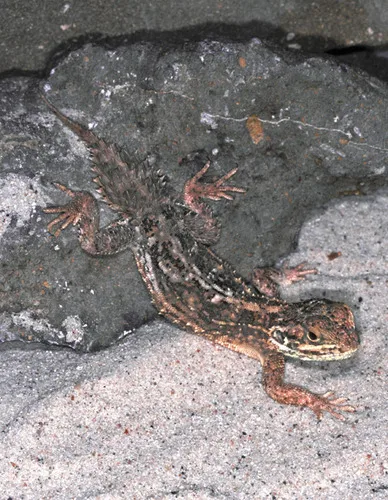
Image source: Web (Bing) / inaturalist.org (Web image (fair-use with source credit))
1. Inspect the scales. Smoothness, keels, and shine tell you the most. Rainbow iridescent gloss points straight to Xenopeltis.
Three rows of thick raised ridges point to Xenodermus. Strongly knobbed, keeled scales point to Xenosaurus.
2. Judge the body shape. Worm-like and thin? Likely Xerotyphlops or a blind-snake relative.
Flattened from top to bottom? Xenosaurus. Heavy, stout, and thick-bodied with a blunt head?
Xenodon, the false fer-de-lance. Once you group by body profile, the field narrows fast.
3. Check the head shape. Broad, viper-like head on a snake that lacks heat pits? Xenodon.
A flattened, angular head that blends into a wide, pancaked body? Xenosaurus. Small, barely distinct head with tiny eyes?
You're looking at a burrower like Xenocalamus or Xerotyphlops.
4. Look at the tail. A swollen, turnip-like tail tip is unique to Xenagama. A short, stubby tail that matches the body color points to Xantusia.
Long and tapering tails are common across the snake genera, so treat length as a weak signal on its own.
5. Note the habitat and activity timing. Night lizards stay inside rock cracks until dusk. Sunbeam snakes surface after heavy rain and warm up on open road edges.
Most blind-snake species turn up only when someone digs in the garden. Location plus behavior plus those visual cues locks the identification.
Run those five checks together and the X-list shrinks to a single genus almost every time.
X-Reptiles at a Glance: Quick-Reference Comparison Table
Here's the entire X-family in one scannable table. Keep it open when you're scrolling through field photos or ID requests.
| Genus | Type | Adult length | Signature trait | Where it lives |
|---|---|---|---|---|
| Xenopeltis | Snake | 1–1.3 m | Rainbow iridescent scales | Southeast Asia, southern China |
| Xenodermus | Snake | 40–60 cm | Three rows of keeled scales | Indonesia, Malaysia |
| Xenodon | Snake | 60–120 cm | Viper mimic posture | Central and South America |
| Xenocalamus | Snake | 30–60 cm | Quill-shaped snout | Sub-Saharan Africa |
| Xerotyphlops | Snake | 25–40 cm | Worm-like blind snake | Mediterranean, Africa, Asia |
| Xylophis | Snake | 30–50 cm | Slender reed-snake build | India, Sri Lanka |
| Xenotyphlops | Snake | ~20–30 cm | Poorly known blind snake | Madagascar |
| Xyelodontophis | Snake | ~60 cm | Dagger-like teeth | Tanzania |
| Xenophidion | Snake | ~40 cm | Burrowing, rarely seen | Southeast Asia |
| Xantusia | Lizard | 5–10 cm | Small, live-bearing night lizard | Southwestern US, Mexico |
| Xenosaurus | Lizard | 10–18 cm | Flattened, knob-scaled body | Mexico, Central America |
| Xenagama | Lizard | 15–20 cm | Swollen turnip-shaped tail | East Africa |
Note the size range. Almost nothing on this list exceeds 1.3 meters. These are not apex predators; they're small, secretive specialists.
Common Visual Mix-Ups: Xenopus, Xenops, and Other Fake X-Reptiles
The internet will trip you up here. Search for "reptiles that start with x" and you'll wade through frogs, birds, and outright errors.
- Xenopus is a clawed frog, not a reptile. It pops up constantly in X-animal lists because it's well known in biology labs. It has no scales and no relationship to the squamates.
- Xenops is a bird, a tropical ovenbird relative. The name gets dragged into alphabetical animal lists more often than it should.
- Xenarthra is a mammal superorder covering anteaters, sloths, and armadillos. Technically a real X-group, but not reptiles.
- Xenophyophores are single-celled organisms found in deep-sea mud. Not even animals in the conventional sense.
The pattern is obvious: anything starting with X gets dumped into a list, regardless of its actual biology. A reliable identification always starts with the physical animal, not the letter.
If you enjoy these alphabetical deep dives, the A-list of reptiles covers everything from agamas to anacondas.
Real-Scenario Spotlight: The Iridescent Sunbeam Snake (Xenopeltis unicolor)
The sunbeam snake is the flagship X-reptile, and for good reason. No other serpent produces that level of iridescence. In direct sunlight, every scale breaks into blue, green, gold, and purple.
It looks less like a snake and more like a piece of labradorite that learned to move.
In our research, the most striking field observations come from Southeast Asia, where villagers occasionally find them crossing roads on humid nights after monsoon rains. They're burrowers by habit, spending daylight hours underground and emerging to hunt frogs, rodents, and other snakes.
That fossorial lifestyle creates a care challenge in captivity. Sunbeam snakes need deep, moist substrate and stable temperatures. Without those conditions, they dehydrate quickly and refuse food.
The rainbow gloss that makes them so desirable fades fast in poor husbandry, which is a sad trade for how striking they look in natural photos.
Real-Scenario Spotlight: The Dragon Snake Mystery (Xenodermus javanicus)
Dragon snakes are the other famous X species, and they're arguably the strangest. The three rows of heavily keeled scales give them a rough, almost prehistoric texture. Combined with a wrinkled, soft-looking skin, they read as alien even to experienced herpetologists.
The challenge with Xenodermus is that it remains poorly adapted to captivity. Aggregate keeper reports show most imported dragon snakes die within months. They refuse the available feeder prey, and the stress of transport often seals their fate.
Even the most dedicated hobbyists struggle to keep them alive long-term, mostly because researchers haven't cracked the code on their exact wild diet and microclimate needs.
That makes seeing one in person a genuine wildlife event. Photographs and video rarely capture how distinctly different this snake feels compared to everything else on the X-list.
X-Reptiles in the Pet Trade: What You'll Actually See in Photos
Let's be straight about the pet market and what it means for image research. Only one X-reptile appears with any regularity in the trade: the sunbeam snake. Everything else shows up as wild-caught strays, rare breeder projects, or museum specimen photos.
This matters when you're trying to identify these animals. Most photos you'll find online fall into three categories. First, professional field photography from researchers and conservation trips.
Second, iNaturalist observations submitted by hikers and herpetology fans. Third, a small pool of studio shots used across news articles and databases.
For accurate visual reference, iNaturalist is the strongest source. The photos are timestamped, geolocated, and reviewed by other naturalists. If an identification seems off, the community flags it.
That crowdsourced vetting makes it far more reliable than the average Pinterest board for species-level identification.
Where to See X-Reptiles in the Wild (and Why They're So Hard to Photograph)
Every X-reptile is secretive by nature. None of them lounge in the open like a basking iguana. Researchers find these animals by flipping rocks, peeling back rotten logs, and walking roads at night with flashlights.
- Sunbeam snakes appear briefly after rain. Warm, wet roads draw them out of the soil, but they vanish within an hour.
- Night lizards require flipping large rocks in the desert. They scatter fast, so photography demands a patient second attempt.
- Dragon snakes turn up in muddy lowland forests, usually at night during the wet season.
- Turnip-tailed agamids sit on rocky outcrops in East Africa, then slip between stones at the first sign of movement.
- Blind snakes live under soil and almost never surface. Your best chance is a freshly tilled garden or a recent excavation.
That secrecy is precisely why the genus list feels so obscure. These animals aren't rare so much as hidden. The X names reflect a group that's more mysterious to us than it is in their actual habitats.
Curious about the rest of the alphabet? Our collection of reptile and mammal lists keeps the same visual-first approach going from A to Z.
Frequently Asked Questions
Which reptile is most commonly known by an X-name?
The sunbeam snake (Xenopeltis unicolor) is the only X-genera reptile with a widespread public nickname that includes an X-letter. Its scientific name starts with X, and its common name refers to the rainbow shine of its scales. In the pet trade, that's what you'll see.
Are there any X-named reptiles that are dangerous to humans?
None of the X-named reptiles pose a serious threat. Xenodon snakes are rear-fanged and considered mildly venomous, but their bites rarely cause more than local swelling. No X-genus contains a medically significant venom production system.
Why do so few reptiles have common names starting with X?
English common names almost never begin with X because the letter is rare in English vocabulary. The scientific Latin and Greek prefixes "xeno-" and "xero-" created a perfect naming source for herpetologists, which is why most X-reptiles carry the letter only in their genus name.
Is Xenochrophis still a valid genus?
No, not in current taxonomy. Most former Xenochrophis water snakes now belong to the genus Fowlea. Older field guides still use Xenochrophis, so you'll see both names in search results.
Always cross-check with the Reptile Database for the accepted current name.
What's the difference between Xenopeltis and Xenodermus?
They're both Asian snakes, but completely different animals. Xenopeltis unicolor, the sunbeam snake, has smooth iridescent scales and grows over a meter long. Xenodermus javanicus, the dragon snake, has rough keeled scales and stays well under a meter.
They belong to different snake families entirely.
Final Cheat Sheet: Your Visual Checklist for X-Reptiles
Keep this quick list handy for any X-reptile identification.
- Rainbow shimmer on smooth scales → Xenopeltis
- Three rows of rough keels on a dark snake → Xenodermus
- Viper-like posture with a thicker, heavier head → Xenodon
- Tiny eyes, worm-like body, pinkish color → Xerotyphlops or Xenotyphlops
- Small live lizard in a desert rock crack → Xantusia
- Flattened lizard with broad head and keeled scales → Xenosaurus
- Chunky agamid with a swollen blunt tail → Xenagama
- Spiky snout on a burrowing snake → Xenocalamus
If the photo shows a frog or a bird, move on. The real X-reptiles are smaller, stranger, and far more satisfying to identify correctly.
With those tips in hand, let's line everything up.
X-Reptiles at a Glance: Quick-Reference Comparison Table
Scale texture, body shape, and range split every X-genus. Here's the short version.
| Genus | Visual cue | Region |
|---|---|---|
| Xenopeltis | Rainbow gloss | Southeast Asia |
| Xenodermus | Three keel rows | Indonesia, Malaysia |
| Xenodon | Viper mimicry | Americas |
| Xantusia | Live-bearing | SW US, Mexico |
| Xenagama | Turnip tail | East Africa |
Common Visual Mix-Ups: Xenopus, Xenops, and Other Fake X-Reptiles
Watch for three impostors. Xenopus is a clawed frog, Xenops is a bird, and Xenarthra is a mammal group. Nothing with feathers or gills belongs on this list.
Real-Scenario Spotlight: The Iridescent Sunbeam Snake (Xenopeltis unicolor)
This species lives underground across Southeast Asia and surfaces after rain. The rainbow shine comes from microscopic ridges on each scale, not pigment.
Real-Scenario Spotlight: The Dragon Snake Mystery (Xenodermus javanicus)
Aggregate keeper reports show poor survival in captivity. Imported wild specimens often refuse all prey within weeks, making observation in nature the better option.
X-Reptiles in the Pet Trade: What You'll Actually See in Photos
Only sunbeam snakes appear with any regularity. For everything else, trust iNaturalist photos. They're geolocated and community-vetted, so frogs and birds rarely slip through.
Where to See X-Reptiles in the Wild (and Why They're So Hard to Photograph)
Sunbeam snakes surface on rainy nights. Night lizards scatter at the first rock flip. Dragon snakes hunt in muddy streams after dark.
None of them pose for photos.
The best strategy is slow walking with a flashlight during wet weather. Flipping rocks in the desert works for Xantusia. For everything else, patience beats persistence.
FAQs: Reptiles That Start With X
What is the most common X-reptile?
The sunbeam snake is the most visible and photogenic X-species. Its iridescent scales and wider distribution make it the one you'll actually encounter.
Are X-reptiles safe to keep as pets?
Most adapt poorly to captivity. Only experienced keepers should attempt sunbeam snakes, and even then, the survival record is poor.
Why do X-reptile names start with X?
"Xeno" means strange or foreign in Greek. It perfectly describes these secretive, unusual animals.
Final Cheat Sheet: Your Visual Checklist for X-Reptiles
Rainbow scales: Xenopeltis. Roman-armor ridges: Xenodermus. Viper pose: Xenodon.
Rock-crack lizard: Xantusia. Turnip tail: Xenagama.
Spot one in a photo? Run the checklist. You'll nail the genus every time.