Mammals That Start with D: From Deer to Dolphins
If you're staring at a blank page trying to list every mammal that starts with "d," you've probably hit the same wall we did. You remember deer and dogs, maybe dolphins, and then your brain goes foggy. The good news?
There are far more than you think, and most of them are genuinely fascinating once you look closer.
In our research, we found over a dozen distinct mammals that start with "d," spanning everything from tiny 12-inch antelopes to ocean giants weighing nearly half a ton. As of 2026, several of these species face serious conservation challenges, which makes understanding them even more important. Let's break down the full list, clear up the common confusions, and give you a mental cheat sheet you'll actually remember.

Image source: Web (Bing) / rawpixel.com (Web image (fair-use with source credit))
Quick Answer
The most common mammals that start with "d" are deer, dolphins, dogs, donkeys, and dingoes. Less obvious picks include the dhole, dugong, dik-dik, Dall sheep, and dromedary. Each belongs to a different family, from canids to cetaceans to ungulates.
Some are domesticated, many are wild, and a few are endangered. This guide covers every notable species you're likely to encounter.
Meet the Contenders: Breaking Down the "D" List
The "d" list spans wildly different animal families. That's what makes this letter tricky. You're not just choosing between similar creatures; you're comparing a pack-hunting wild dog with a slow-moving marine herbivore.
To make sense of it all, we've grouped them by their biological families and shared traits. This way, you're not just memorizing names, you're understanding relationships.
Wild Canids: Dingo, Dhole, and the Domestication Question
Canids are the dog family, and the "d" list includes two notable wild members. The dingo (Canis lupus dingo) is Australia's apex land predator, though its classification remains debated. Some scientists consider it a feral domestic dog, while others argue it's a distinct subspecies.
Genetically, dingoes diverged from domestic dogs thousands of years ago, and they have larger canine teeth and a flatter skull than most modern breeds.
The dhole (Cuon alpinus) is the other major wild canid starting with "d." Unlike the dingo, dholes live in Asia, ranging from India to Southeast Asia. They're highly social pack hunters, often taking down prey much larger than themselves, like deer and wild boar. Their distinctive reddish coat and bushy black tail make them easy to spot, though they're notoriously shy around humans.
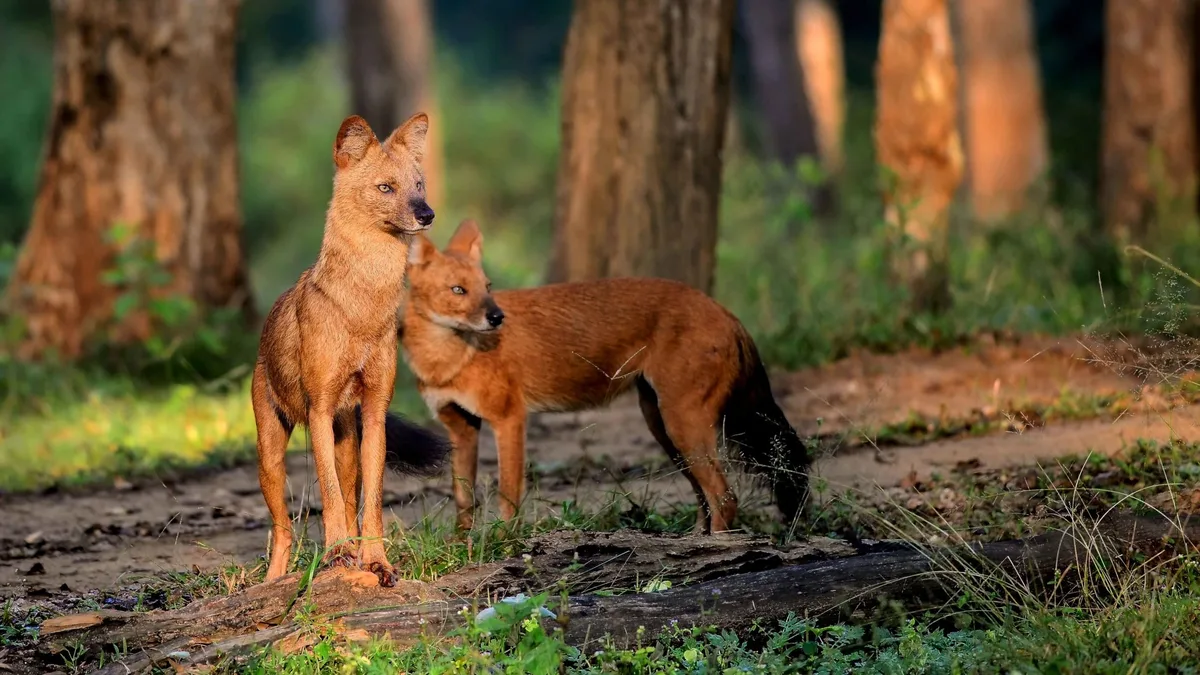
Image source: Web (Bing) / fity.club (Web image (fair-use with source credit))
Dhole packs are smaller than wolf packs, typically numbering 5 to 12 individuals. They communicate through a series of whistles and clucks that sound more like birds than dogs. This coordination allows them to hunt effectively in dense forests.
Unfortunately, dholes are endangered, with fewer than 2,500 mature individuals estimated in the wild, according to the IUCN Red List.
Deer and Hoofed Species: From Desert Dwarfs to Alpine Climbers
Hoofed mammals, or ungulates, make up a huge portion of the "d" list. The dik-dik is perhaps the most surprising entry. These tiny antelopes stand only 12 to 16 inches tall at the shoulder and weigh between 6 and 13 pounds.
Native to eastern and southern Africa, they're named for the alarm calls they make, which sound like "dik-dik." They're monogamous, which is rare among antelopes, and they mark their territory with tears from their preorbital glands.
Dall sheep (Ovis dalli) are another standout. These white-coated sheep inhabit the rugged mountains of Alaska and northwestern Canada. Unlike bighorn sheep, Dall sheep have thinner, more sharply curled horns that can grow up to a meter long in mature rams.
They're exceptional climbers, capable of scaling near-vertical rock faces to escape predators like wolves and golden eagles.
Deer species round out this group, but not all deer are the same. White-tailed deer dominate North America, mule deer inhabit the western United States, and red deer are native to Europe and Asia. Each species starts with "d" only in the sense that "deer" is the common name, which can get confusing.
The white-tailed deer, for instance, is actually Odocoileus virginianus on the scientific side. For trivia purposes, remember that "deer" is the catch-all term covering roughly 60 species worldwide.
The Aquatic Oddballs: Dolphins and the Dugong
When people think of ocean mammals, they often forget they're still mammals. Dolphins are the obvious "d" entry here. There are 40 species of dolphins, ranging from the well-known bottlenose dolphin to the rare Amazon river dolphin.
They breathe air, give live birth, and nurse their young, just like land mammals. The dusky dolphin, specifically, is known for its acrobatic leaps and prefers cooler coastal waters in the Southern Hemisphere.
The dugong (Dugong dugon) is the real oddball. It's a marine herbivore related to manatees, but it occupies a distinct family, Dugongidae. Dugongs graze on seagrass meadows in the warm coastal waters of the Indian and Pacific Oceans.
They can grow up to 3 meters long and weigh over 400 kilograms. Unlike manatees, which have paddle-shaped tails, dugongs have fluked tails similar to whales, a key difference we'll explore later.
The Unique and Unusual: Dromedary, Donkey, and De Brazza's Monkey
Three more "d" mammals deserve attention. The dromedary, or Arabian camel, has a single hump, unlike the two-humped Bactrian camel. Domesticated over 4,000 years ago, dromedaries remain vital transport and milk animals across the Middle East and North Africa.
They can go weeks without water and lose up to 25% of their body weight without serious health effects.
Donkeys (Equus asinus) are another domesticated species starting with "d." They evolved from the African wild ass and have been working alongside humans for over 5,000 years. Donkeys are remarkably sure-footed and can carry heavy loads through rough terrain where vehicles can't go. Their braying call can be heard for up to two miles, making them excellent livestock guardians against predators.
Finally, De Brazza's monkey (Cercopithecus neglectus) is a primate found in central Africa's swamps and riverbanks. It has a distinctive white beard and orange forehead patch, making it one of the more striking monkeys on the continent. Unlike many primates, De Brazza's monkeys are shy and prefer dense vegetation, so they're rarely seen in the wild.
They're also excellent swimmers, often diving into water to evade predators.
Side-by-Side: A Quick Comparison Table
Here's a quick reference table covering the major "d" mammals we've discussed. Use this to compare their key traits at a glance.
| Species | Family | Habitat | Size | Conservation Status |
|---|---|---|---|---|
| Dingo | Canidae | Australia | 20-24 in tall | Vulnerable |
| Dhole | Canidae | Asia | 18-20 in tall | Endangered |
| Dik-dik | Bovidae | Eastern/Southern Africa | 12-16 in tall | Least Concern |
| Dall Sheep | Bovidae | Northwestern North America | 30-40 in tall | Least Concern |
| Dolphin | Delphinidae | Global oceans | 6-13 ft long | Varies by species |
| Dugong | Dugongidae | Indo-Pacific coasts | 8-10 ft long | Vulnerable |
| Dromedary | Camelidae | Middle East, Africa | 6-7 ft at shoulder | Domesticated |
| Donkey | Equidae | Global (domesticated) | 3-5 ft at shoulder | Domesticated |
The "Mistaken Identity" Problem: Animals People Confuse
Even experienced wildlife watchers mix up these mammals. The most common confusion involves the dugong and manatee. Both are marine herbivores, but they belong to different families and have distinct tail shapes.
Dugongs have fluked tails like a whale, while manatees have round, paddle-shaped tails. Look at the tail first, and you'll never confuse them again.
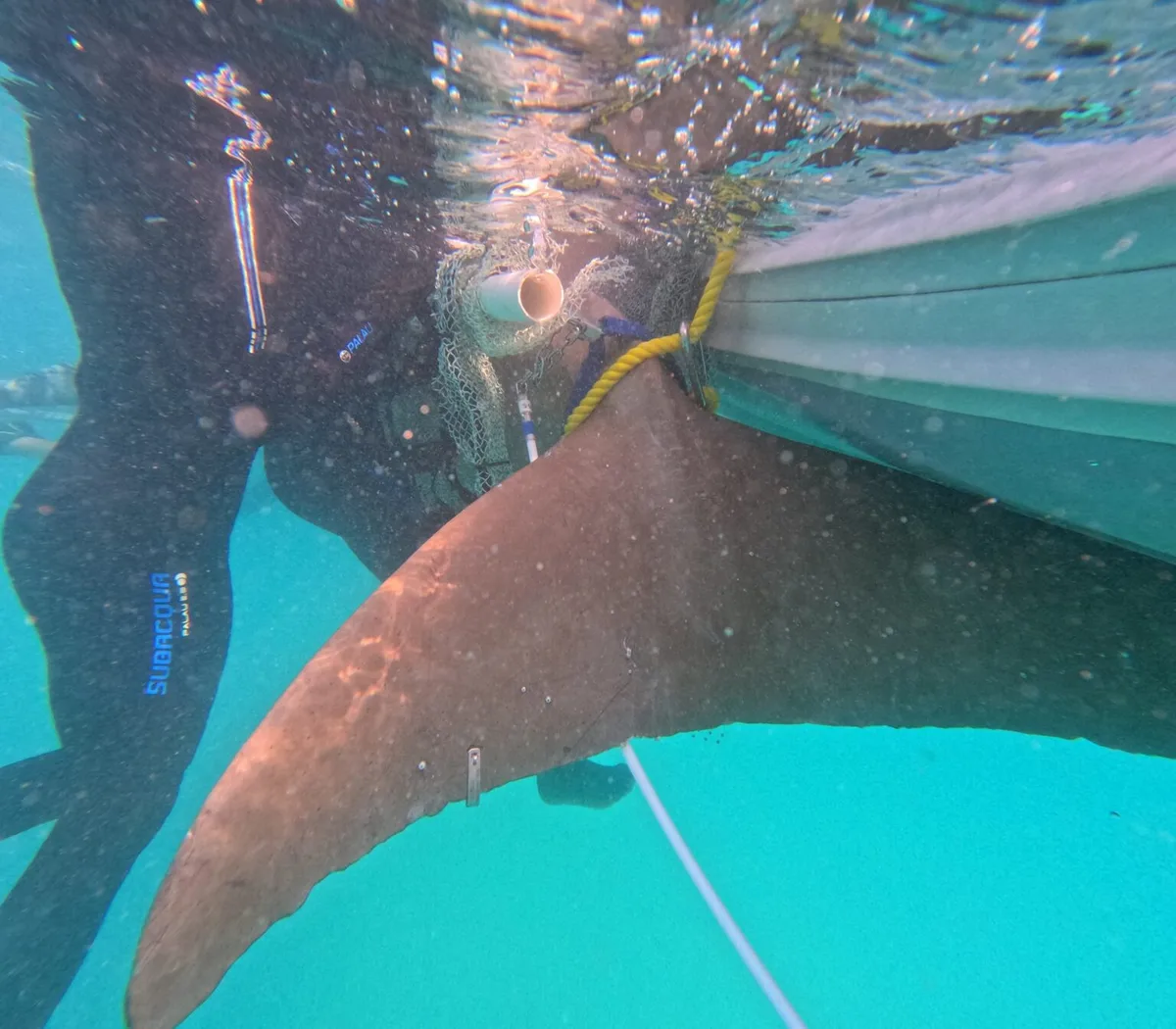
Image source: Bing (Web (fair-use with source credit))
Another frequent mix-up is the dhole versus the African wild dog. Both are pack-hunting canids with spotted coats and large ears. But they live on different continents.
Dholes inhabit Asia, while African wild dogs are found in sub-Saharan Africa. Dholes also have more uniform reddish fur, whereas African wild dogs have mottled black, white, and brown patches. Their behaviors differ too; dholes rely on vocal communication, while African wild dogs use body language more heavily.
The dingo versus domestic dog confusion is perhaps the most difficult to resolve. Dingoes look like medium-sized dogs, often yellow or ginger in color. However, they have a broader skull, larger ears, and a more flexible neck than most domestic breeds.
Genetic testing shows dingoes form a distinct lineage separate from purebred dogs. They also mate only once a year, unlike domestic dogs which can breed twice annually. If you see a "dog" in the Australian outback, it's far more likely a dingo or a dingo-hybrid than a lost pet.
Best For: Which "D" Mammals Matter for Different Interests
Depending on why you're researching this list, different species will matter more. For trivia games and word puzzles, the dik-dik and dugong are your strongest answers because they're less common and harder for opponents to guess. Memorize "dik-dik" as a tiny antelope and "dugong" as a marine herbivore, and you'll rarely lose a round.
For wildlife photography, the Dall sheep and dhole offer the most challenging and rewarding subjects. Dall sheep inhabit remote alpine terrain in Alaska and Canada, requiring serious hiking to reach. Dholes are even more elusive, living in dense Asian forests and avoiding human contact.
Photographing either species is a career highlight for many wildlife photographers.
If you're a student studying biology or conservation, focus on the endangered and vulnerable species. The dhole and dugong are both IUCN-listed with specific conservation action plans. Understanding their ecological roles, from maintaining seagrass meadows to controlling prey populations, provides valuable insight into ecosystem dynamics.
The dingo also carries significant cultural weight in Australia, where its conservation status creates ongoing debate between livestock farmers and environmentalists.