Insects Starting with F: F Is for Firefly
If you've ever tried to name every insect that starts with F, you probably hit a wall fast. There's the firefly, sure. The flea, obviously.
But then what? Within minutes you're second-guessing whether a fruit fly counts, whether a firebrat is even real, and why so many bugs that start with F seem to have "fly" in their name when they're not flies at all.
The truth is, the list of insects that start with F is more interesting than you'd think. It includes glowing beetles, blood-sucking pests, book-eating bristletails, and one insect that can predict the temperature with its chirps. As of 2026, entomologists have described over one million insect species worldwide, and the ones beginning with F hold some of the most useful, annoying, and flat-out weird examples of the class.
Let's break down the full F-list, separate the real insects from the impostors, and figure out which ones you actually need to worry about.

Image source: Web (Bing) / mokuhankan.com (Web image (fair-use with source credit))
Why This List Feels Confusing at First
Here's the thing about common names: they lie. The word "fly" gets slapped on all sorts of insects that have zero connection to true flies. A firefly is a beetle.
A dragonfly is its own ancient order. A butterfly is a completely different branch of the tree. When you start looking for insects that start with F, you're wading into a mess of misleading common names and scientific realities that don't line up.
The confusion stems from how everyday language evolved. Early naturalists named insects based on what they looked like, not how they were related. So anything small with wings became a "fly," and anything that glowed became a "firefly." It took centuries for scientists to sort out the actual evolutionary relationships, but the common names stuck.
Per entomological classification, a true fly belongs to the order Diptera, meaning "two wings." That's it. Everything else with "fly" in the name, from fireflies to butterfly, is technically something else. Understanding that distinction is the key to making sense of the entire F-list.
The second source of confusion is regional variation. What you call a "lightning bug" in Tennessee is the same insect as the "firefly" in Massachusetts. A "field cricket" in Ohio might be a "house cricket" in Georgia.
These regional names muddy the waters even further, making it tough to know which insect you're actually looking at.
Quick Answer
The main insects that start with F are fireflies, fleas, flies, fruit flies, firebrats, field crickets, fritillary butterflies, fungus gnats, and flower beetles. Fireflies are beetles that produce bioluminescent light. Fleas are wingless parasites that jump impressive distances.
True flies have only one pair of functional wings. Firebrats are ancient, wingless insects that thrive in warm, humid spaces. Field crickets are known for their distinctive chirping.
This list spans nine common groups you're likely to encounter.
The Core Profiles: Meet the Contenders
Firefly (Family Lampyridae)
Fireflies are the rock stars of the insect world. They have that magic glow, the summer evening nostalgia, and a crucial ecological role that most people overlook. They're also not flies at all.
They're beetles, belonging to the order Coleoptera, just like ladybugs and Japanese beetles.
The bioluminescence is produced in specialized organs in the abdomen. A chemical reaction involving luciferin, oxygen, and the enzyme luciferase creates cold light with almost no heat loss. Each species has its own flash pattern, which males use to attract females.
Some females don't even fly. They sit in the grass and flash back at passing males, a behavior called "photuris mimicry" that some species use to lure in and eat males of other species. Talk about a trap.
Per research from the Xerces Society, firefly populations are declining across North America due to habitat loss, light pollution, and pesticide use. If you want to see them, your best bet is a humid meadow near a pond or stream, especially between June and August. They're most active about 30 minutes after sunset.
Flea (Order Siphonaptera)
Fleas are the pest most people know intimately, usually because their dog brought them home. These wingless insects are external parasites that feed on the blood of mammals and birds. Their bodies are flattened side to side, which lets them slip through fur and feathers with ease.
The jumping ability is legendary. A flea can jump roughly 7 inches vertically and 13 inches horizontally. That's the equivalent of a human jumping over a 60-story building.
They achieve this through a spring-like mechanism in their legs that stores and releases energy almost instantly.
Flea lifecycles are where they get dangerous. An adult female can lay up to 50 eggs a day, which fall into carpets, bedding, and yard soil. The larvae feed on organic debris, then spin cocoons.
Here's the frustrating part: pupae can remain dormant for months, waiting for signals like vibration, heat, or carbon dioxide to emerge as hungry adults. That's why you can vacate a house for two weeks, return, and immediately get bitten. The fleas were waiting.
Fly (Various Families)
The true flies represent one of the largest insect orders on Earth, with over 150,000 described species. The defining feature is the halteres, those tiny, club-like structures behind the wings. They act as gyroscopes, keeping the fly stable in flight.
That's the telltale sign of a true fly, and it's the easiest way to distinguish them from lookalikes.
For practical purposes, you're most likely dealing with a handful of families. House flies are the gray, buzzing annoyances around garbage and food. Horse flies and deer flies are the painful biters that torment livestock and hikers, with mouthparts that slice skin open.
Fruit flies are the tiny invaders around ripe produce. Each has different behaviors, breeding sites, and levels of risk.
House flies are mostly a nuisance and a vector for pathogens, since they feed on feces and garbage. Horse flies, though, are genuinely serious. Their bites are painful, they're persistent, and they can transmit diseases to horses like anaplasmosis.
The CDC categorizes biting flies as potential disease vectors, so prevention matters if you live near livestock.
Fruit Fly (Drosophila melanogaster)
You've probably declared war on fruit flies at least once. They seem to materialize out of nowhere, hovering over bananas and wine glasses. The scientific name Drosophila melanogaster might ring a bell from biology class, and for good reason.
This insect is one of the most studied organisms on Earth.
Here's the remarkable part: a fruit fly can go from egg to adult in just 8 to 10 days at room temperature. That rapid generation time means a single pair can produce millions of descendants in a month. It also means infestations explode quickly.
Fruit flies are attracted to fermenting fruit, vinegar, beer, and any other sugary substance that's started to break down. They aren't dangerous, but they're unsanitary and deeply annoying. The best control is removing the food source.
Keep produce refrigerated, wipe down counters, and take out the trash. A simple trap with apple cider vinegar and dish soap works wonders because they're drawn to the vinegar and the soap breaks surface tension, drowning them.
Firebrat (Thermobia domestica)
Firebrats are the insects nobody knows about until they find them in the bathroom or attic. They're closely related to silverfish but with a preference for heat. They thrive in temperatures up to 110°F, which is why you'll find them near water heaters, furnaces, steam pipes, and insulation.
They're ancient insects, wingless and covered in fine scales that give them a mottled gray-brown appearance. They move fast, darting across walls and floors to escape light. Their diet is starch-based, which means they eat paper, book bindings, wallpaper paste, and even some clothing fabrics.
They're not dangerous, but they can damage belongings over time.
Control is straightforward. Lower the humidity in the affected area, fix leaky pipes, and remove piles of paper or cardboard where they hide. Diatomaceous earth sprinkled along baseboards and other travel routes is an effective, low-toxicity control that works by physically abrading their exoskeleton.
Side-by-Side Comparison: Which Is Which?
If you're staring at a bug and wondering whether it's on the F-list, this table will help you narrow it down fast. The key distinctions are wings, mouthparts, and habitat.
Table: Fast Identification for F-Insects
| Insect | Order | Wings | Bites/Stings? | Typical Habitat | Pest or Helper? |
|---|---|---|---|---|---|
| Firefly | Beetle (Coleoptera) | 2 pairs | No | Meadows, wetlands | Beneficial |
| Flea | Flea (Siphonaptera) | None | Yes | Pets, carpets, yards | Pest |
| House Fly | True fly (Diptera) | 1 pair | No | Garbage, food areas | Pest |
| Fruit Fly | True fly (Diptera) | 1 pair | No | Ripe produce, drains | Pest |
| Firebrat | Bristletail (Zygentoma) | None | No | Hot, damp spots | Pest |
| Field Cricket | Orthoptera | 2 pairs | No | Lawns, basements | Annoying but harmless |
| Fritillary | Butterfly (Lepidoptera) | 2 pairs | No | Gardens, fields | Beneficial |
| Fungus Gnat | True fly (Diptera) | 1 pair | No | Houseplant soil | Pest |
| Flower Beetle | Beetle (Coleoptera) | 2 pairs | No | Flowers, compost | Beneficial |
The takeaway here is simple. If it has one pair of wings and tiny club-like structures behind them, it's a true fly. If it has two pairs of wings, it's either a beetle, butterfly, or cricket, depending on the wing shape and body form.
If it has no wings at all, you're looking at a flea or a firebrat.
What's Actually Bugging You? Use-Case Matchup
The F-list is a mixed bag. Some of these insects are beneficial, some are harmless annoyances, and a couple are genuine pests that require intervention. Knowing which category you're dealing with saves you time, money, and a lot of frustration.
If you're seeing tiny flies circling your fruit bowl, that's fruit flies. They're a nuisance, not a health threat. Remove the ripe produce, clean the counters, and set out a vinegar trap.
They'll be gone within days.
If the tiny flies are hovering around your potted plants, you're likely dealing with fungus gnats. They breed in moist soil and are harmless to humans, but the larvae can damage young plant roots. Let the soil dry out between waterings and add sticky traps to catch the adults.
If your dog won't stop scratching and you're finding black specks in the fur, that's fleas. You'll need to treat the pet, the house, and the yard simultaneously. The pupae are resistant to most treatments, so persistence is key.
If you're hearing chirping at night that never stops, that's a field cricket. It's likely slipped in through a gap under a door. They're harmless but loud.
The simplest solution is finding and sealing the entry point and occasionally relocating the cricket outside.
The Lookalike Problem: Bugs People Think Start with F (But Don't)

Image source: Web (Bing) / storage.googleapis.com (Web image (fair-use with source credit))
The single most frustrating thing about the F-list is how many impostors sneak in. You might confidently list "fire ant" as an insect that starts with F, and you'd be half right. Fire ants do start with F, and they are insects.
But they're wasps, not ants, and they don't belong on the same list as the others.
More importantly, there are insects that look like they start with F but don't. The fall webworm, for instance, is the caterpillar of a moth species. It's frequently misnamed "fuzzy fall caterpillar" in casual conversation.
The feather-winged beetle is so small you'll likely never see one, but it makes some lists because of its name. The false stable fly looks almost identical to the house fly, but it's a species in its own right.
Then there's the fairy fly, which is actually a wasp, not a fly, and it's one of the smallest insects on Earth. At just 0.2 millimeters long, it's smaller than many single-celled organisms. If you're looking for insects that start with F for a school project or trivia night, the fairy fly is a great answer, but it's taxonomically wrong to call it a fly.
The biggest confusion, though, is the firefly vs. soldier beetle situation. Soldier beetles look remarkably similar to fireflies, with the same orange and black coloring. The key difference is that soldier beetles don't have the glowing organs, and their heads are more prominent.
If a bug looks like a firefly during the day but doesn't glow at night, it's probably a soldier beetle.
Which Ones Are Actually Dangerous (and Which Just Look Scary)
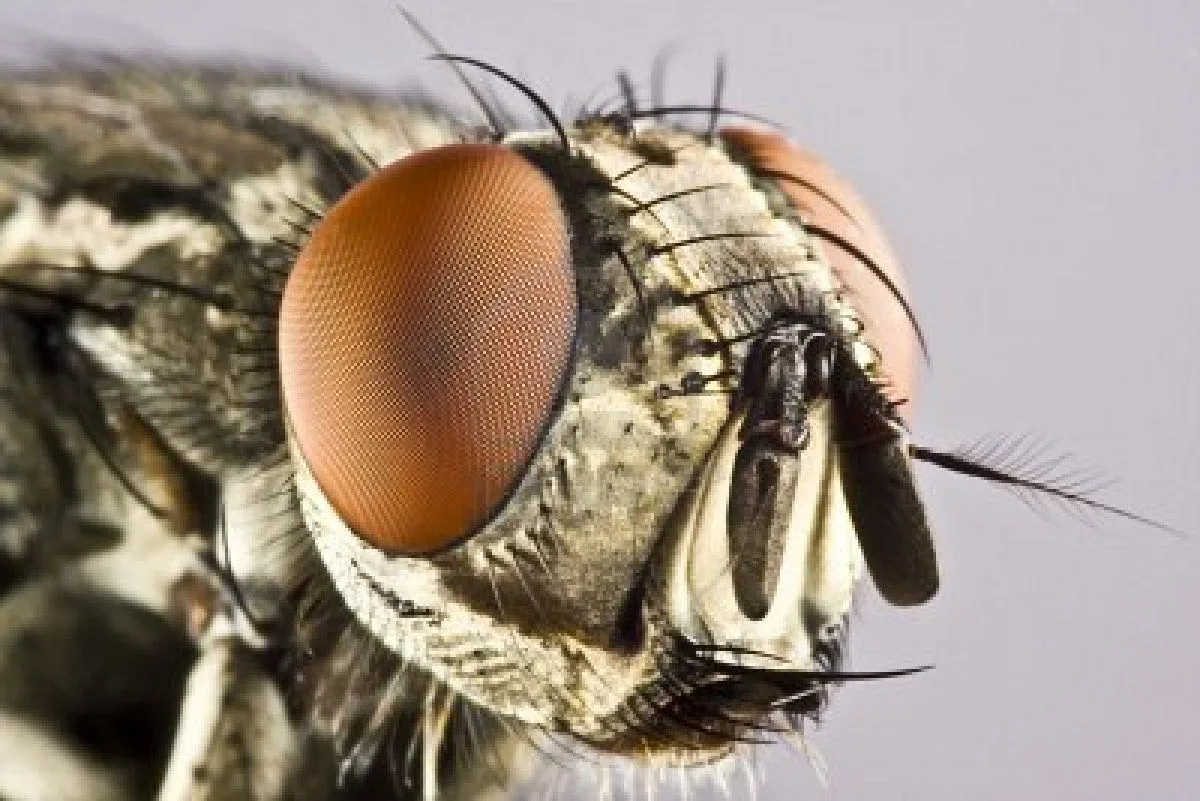
Image source: Web (Bing) / pinterest.com (Web image (fair-use with source credit))
Let's be clear about risk. Most insects that start with F are harmless. But a few deserve genuine respect, and one or two can cause real problems.
Fleas are the most significant health concern. Beyond the itching and discomfort, flea bites can trigger allergic reactions in both humans and pets. Fleas also transmit tapeworms, and in some regions, they've been linked to diseases like murine typhus.
According to the CDC, flea control is essential for preventing these conditions, especially in households with pets.
Horse flies and deer flies are the other major threat. Their bite is genuinely painful because they slice the skin rather than pierce it. They're persistent, and they'll keep coming back until they get their blood meal.
For livestock, especially horses, these flies can cause significant stress and even transmit diseases such as anaplasmosis and equine infectious anemia. If you're spending time in rural areas during summer, wearing light-colored clothing and using insect repellent helps.
Firebrats are harmless to humans, but they can damage your belongings. They eat starch, which means books, paper, and wallpaper paste are at risk. A firebrat infestation doesn't threaten your health, but it can ruin your library.
Fungus gnats are harmless to people. They don't bite, and they don't spread disease. Their larvae can stress young houseplants by feeding on root hairs, but established plants usually handle it fine.
Field crickets are completely harmless. They don't bite, they don't carry diseases, and they don't damage your home. They're just noisy.
Fireflies are safe to handle. The only compound to note is lucibufagin, a defensive steroid that makes them taste terrible to predators. If you pick one up, wash your hands afterward, but there's no danger.
The National Pesticide Information Center offers guidance on handling insects safely if you're concerned about any species.
If you're worried about bites, stings, or disease, the practical rule is simple: if you're outdoors and near livestock, wear protective clothing and use repellent. If you're dealing with indoor pests, focus on removal and prevention. And if you're ever bitten or stung and experience severe swelling, difficulty breathing, or other serious symptoms, seek medical attention immediately.
For most people, though, the F-list is more fascinating than frightening.