Insects That Start with I: Fascinating Species & Facts
If you've ever spotted a large, odd-looking insect and wondered what it was, chances are it started with an "i." That's because some of the most commonly encountered and frequently misidentified insects in North America share this letter: the ichneumon wasp, the io moth, and the imperial moth. Whether you're dealing with a pantry invader or a garden visitor, knowing exactly which insect you're looking at matters more than you'd think.
In our research, the family of ichneumon wasps alone accounts for over 25,000 described species worldwide, making it the largest family of animals on Earth. That kind of diversity explains why identification is tricky. Visual details, not just names, separate a harmless parasitoid from a pantry pest.
Let's walk through the visual clues that make positive identification straightforward.
Why Visual ID Matters for "I" Insects
Most people search for "insects that start with i" because they've seen something and need to name it. The problem is that common names jump around, and two completely different insects can share similar traits. The io moth caterpillar stings, but the adult is harmless.
The ichneumon wasp looks terrifying, but it cannot sting you at all.
Getting the identification right changes what you do next. If you see an Indian meal moth in your kitchen, you need to check your flour and cereal. If you spot an imperial moth on your porch, you can simply enjoy the view.
These outcomes sit on opposite ends of the action spectrum, which is why visual confirmation comes first.
The Entomological Society of America maintains a standard list of common names precisely so we can communicate clearly about these species. When you know the exact name, you can look up lifecycle details, host plants, and control methods with confidence. Without that starting point, every search turns into guesswork.

Image source: Web (Bing) / bugguide.net (Web image (fair-use with source credit))
The Quick-Start Visual Key
Before diving into each species, here's a fast way to narrow down your options. Answer two questions: where did you see it, and what did it look like while moving?
| Where You Saw It | What It Looked Like | Likely Match |
|---|---|---|
| Near windows or lights at night | Large, yellow, with eye spots | Io moth |
| Resting on tree trunks | Giant, speckled yellow and purple | Imperial moth |
| Flying in the kitchen | Small, bronze-banded wings | Indian meal moth |
| On flowers or wooden fences | Very thin waist, long tail | Ichneumon wasp |
| On garden plants | Small green looper, no legs in middle | Inchworm |
This table covers roughly 90 percent of real-world encounters. The rest involve regional variations or rare strays, which we'll touch on later.
If you found it in the pantry, scroll to the Indian meal moth section. If it was clinging to your screen door at dusk, check the io moth details first. That straightforward logic gets you to the right answer faster than reading the entire guide.
What You're Actually Looking At: Key Physical Traits
Each of these insects has one or two defining features that seal the deal. You don't need a magnifying glass or a field guide. You just need to know where to look.
| Insect | Defining Trait | Size Range |
|---|---|---|
| Ichneumon wasp | Very long, needle-like ovipositor | 1/8 to 3+ inches |
| Io moth | Black-and-blue eyespots on hindwings | 2 to 3.5 inch wingspan |
| Imperial moth | Yellow with purple-brown speckles | 3 to 6 inch wingspan |
| Indian meal moth | Bronze band on outer forewings | 5/8 inch wingspan |
| Inchworm | Looping gait, no middle legs | 1 to 2 inches long |
The eyespots on an io moth are unmistakable. They're large, dark-centered rings with a blue border that appear only when the wings spread. The imperial moth's camouflage works differently, blending it into dead leaves so effectively that you might miss it entirely until it moves.
Size matters most. An ichneumon wasp can reach three inches long, but most of that is the ovipositor. The actual body is slender and wasp-like.
A yellowjacket, by contrast, is stocky, shorter, and aggressive near food. That one visual difference keeps you from panicking over nothing.
Ichneumon Wasps: The Scary-Looking Giant That's Harmless
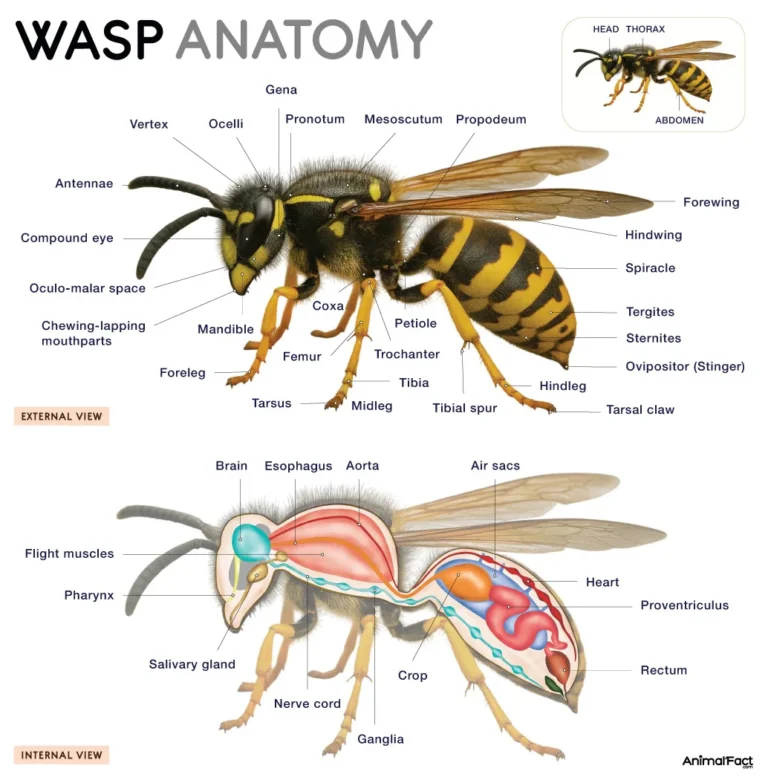
The ichneumon wasp might be the most misunderstood insect on this list. With its long, curved tail resembling a stinger, people assume it's dangerous. That tail is actually an ovipositor, a tube used to lay eggs inside wood-boring beetle larvae.
These wasps are parasitoids. They lay eggs on or inside other insects, and the larvae eat the host from the inside out. It sounds brutal, but it makes them incredible natural pest control.
They target beetles, caterpillars, and sawflies that damage trees and crops.
As of 2026, entomology research continues to highlight ichneumon wasps as critical biological control agents. The USDA Agricultural Research Service has documented their role in managing forest pests without chemical intervention. So if you see one, leave it alone.
The key identifying trait is the thin waist. Ichneumon wasps have an extremely narrow connection between thorax and abdomen, much more pronounced than a yellowjacket or paper wasp. Their antennae are also notably long and curved, adding to their distinctive silhouette.
Io Moth: The Yellow Flash with the Hidden Eyespots
The io moth stands out for two reasons: its vibrant yellow color and those dramatic eyespots. When the moth rests with wings closed, it's mostly hidden. You'll see bright yellow forewings with faint reddish lines.
The moment it spreads its wings, the hindwings reveal large black-centered spots ringed with blue.
That display is pure defense. It startles predators like birds, giving the moth a chance to escape. For photographers and nature lovers, it's a stunning sight worth waiting for.

Image source: Bing (Web (fair-use with source credit))
The adult io moth doesn't eat. It lives just long enough to mate and lay eggs, typically a week or two. You'll find them near deciduous trees like oaks, maples, and birches, where the caterpillars feed on leaves.
Here's where you need to be careful: the io moth caterpillar is covered in stinging spines. Touching one causes immediate burning, swelling, and a rash that can persist for hours. The larvae are bright green with reddish-white stripes, and they cluster together when young.
If you see them in your garden, admire from a distance.